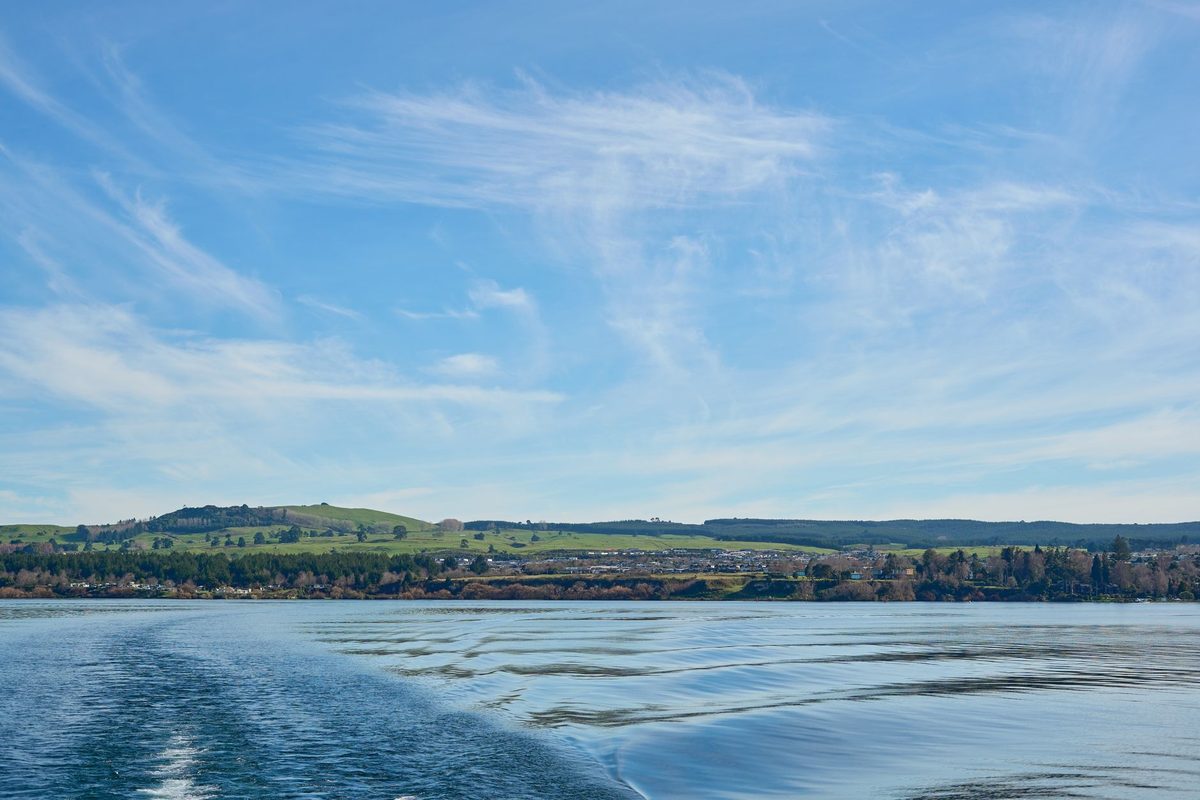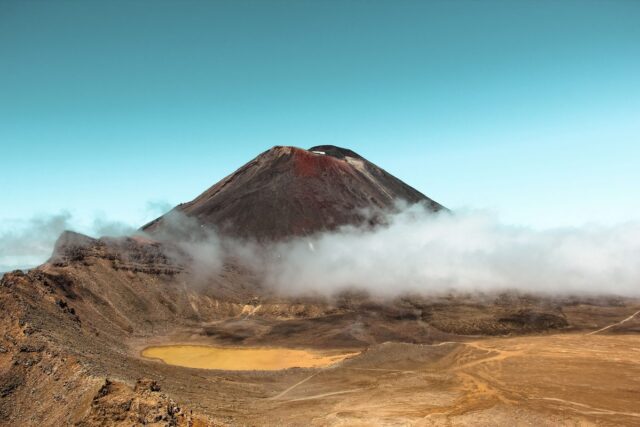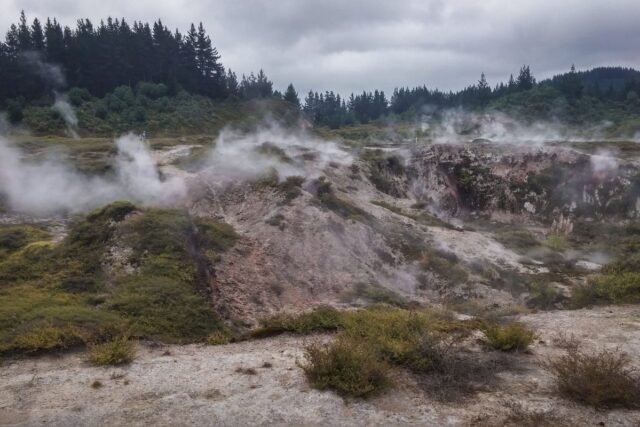
The Huka Falls walk is a free, well-formed riverside track that takes you from Spa Park to Huka Falls in 45 to 60 minutes each way, following the Waikato River through native bush and past a naturally hot stream before finishing at one of the most-visited natural sights in the North Island. It is flat by New Zealand standards, needs no booking, no permit and no gear beyond decent shoes, and it works for almost anyone passing through Taupo on a hiking or walking itinerary, from someone with two hours to kill before a bus to someone building a full day out of the district’s short walks. This guide covers the track itself, what you will actually see, how it compares with driving straight to the falls car park, and where it sits against the other short walks around town.
The walk at a glance
Lead-in: the Huka Falls walk (DOC’s official name is the Spa Park to Huka Falls Walk) covers roughly 3 km one way along the true right bank of the Waikato River, takes 45 to 60 minutes each way at an easy pace, is rated “Easiest” by the Department of Conservation, costs nothing to walk, needs no booking, and is open year-round from dawn to dusk with the Huka Falls car park itself locked overnight between 5:30pm and 8:30am (a $30 release fee applies if you get caught behind the gate after hours). The track is wide, well-formed gravel and packed earth for almost its entire length, suitable for trail running shoes rather than serious boots, and it is one of the very few walks in this guide short enough to fit into a stopover between buses.
You can walk it one way and arrange a pickup, walk it as an out-and-back (the more common approach for backpackers without a car), or treat it as the outbound leg of a longer day that continues north along the river toward Aratiatia. None of that changes the core fact that makes this one worth doing: the falls themselves are free, and walking to them costs you nothing but time, which is the opposite of how most of the district’s headline attractions work.
Getting to the trailhead
Lead-in: the walk starts at Spa Thermal Park, reached by heading north out of town on Tongariro Street, turning right onto Spa Road, then left into County Avenue, where there is free parking at both the Spa Park end and the Huka Falls end, no shuttle or paid transport is required to reach either trailhead, and it is a comfortable 25 to 35 minute walk or a five to ten minute drive from central Taupo to the Spa Park car park if you are staying somewhere covered in the where to stay in Taupo guide.
If you do not have a car, walking from town adds roughly half an hour each way but costs nothing, and it is a genuinely pleasant approach through Spa Thermal Park’s open grass and pine before you drop down to the river. If you are relying on public and shared transport around Taupo, there is no scheduled bus route to either car park, so your options are walking, cycling, a rental car, or a taxi or rideshare for one leg of the trip. Plenty of backpackers walk in and get a lift or taxi back from the Huka Falls end, which has a cafe, gift shop and toilets, and is an easier place to wait for a ride than the quieter Spa Park end.
From the falls end, Huka Falls is also on the route of most Taupo day-tour minibuses and the hop-on sightseeing loops that some hostels sell at their front desks, so if your feet are tired on the way back you are not entirely stuck. That said, doing the walk both directions is the whole point: driving straight to the falls car park gets you the photo but skips the river.
What the track is actually like
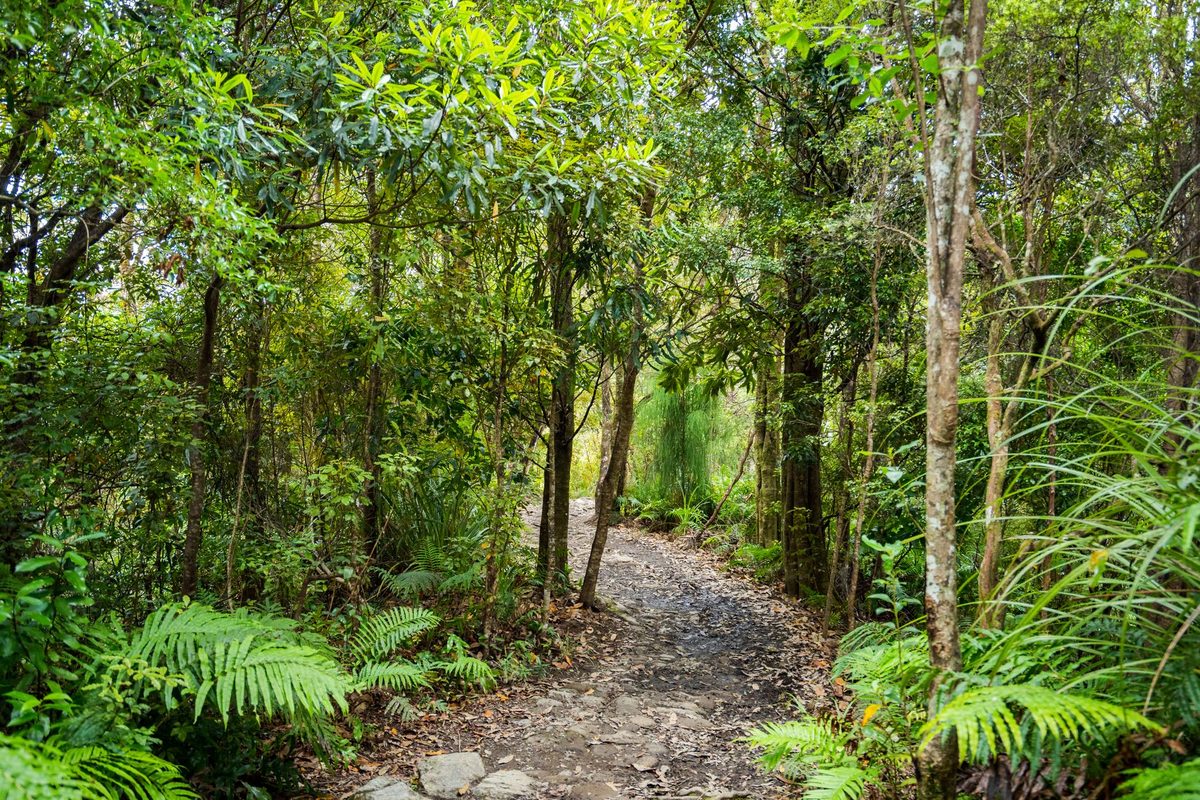
From the Spa Park car park, a signposted path drops through pine and native regrowth for about five minutes to the riverbank, where you cross a footbridge over the Otumuheke Stream, a naturally hot stream that flows into the Waikato and is warm enough to feel through your shoes on a cool morning. This is also the access point for Otumuheke’s thermal pools if you want to detour for a soak before or after the walk, though that is a separate stop, not part of the walking track itself.
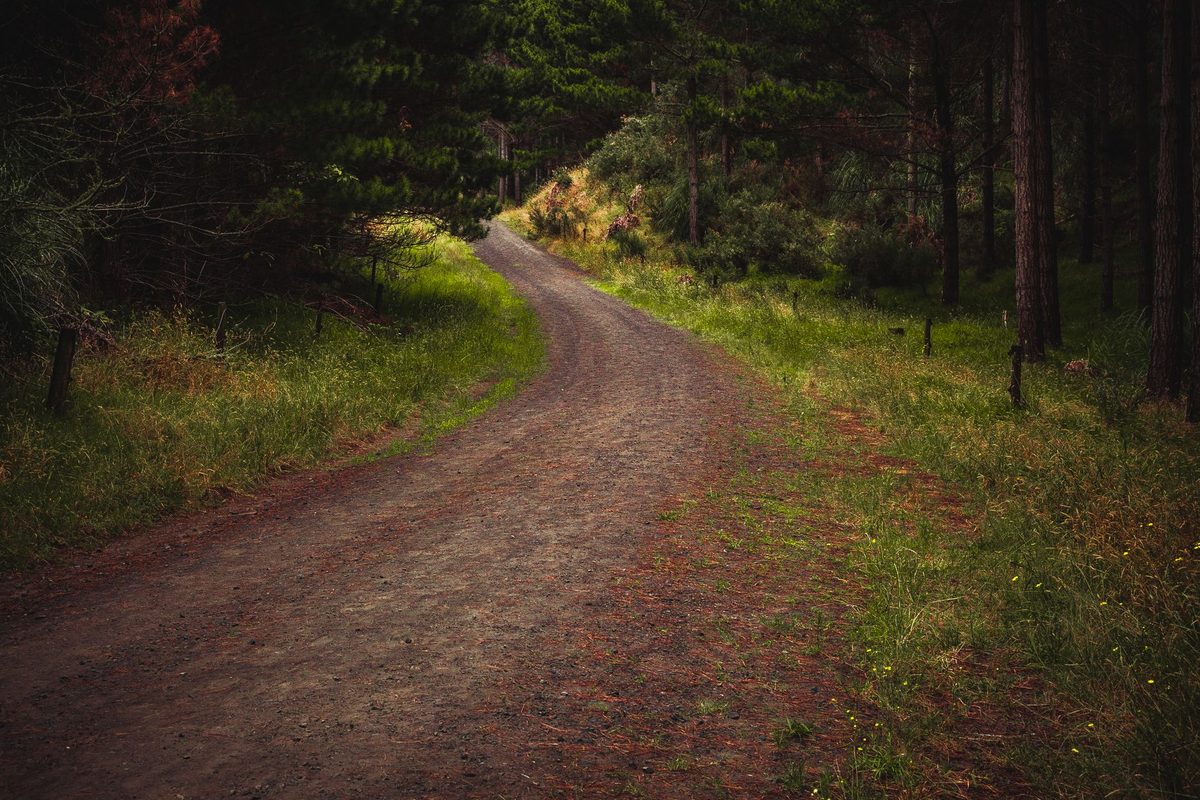
From the stream crossing, the track hugs the true right bank of the Waikato River almost the entire way, alternating between open sections with full river views and short stretches under tree cover. The surface is compacted gravel and packed dirt, wide enough for two people to pass comfortably, with a handful of short board sections over damp ground. There is very little elevation change: a few gentle rises and dips, nothing that qualifies as a climb. Prams with reasonable wheels can manage most of it, though it is not officially a pram-friendly track and there are tree roots and the odd rough patch.
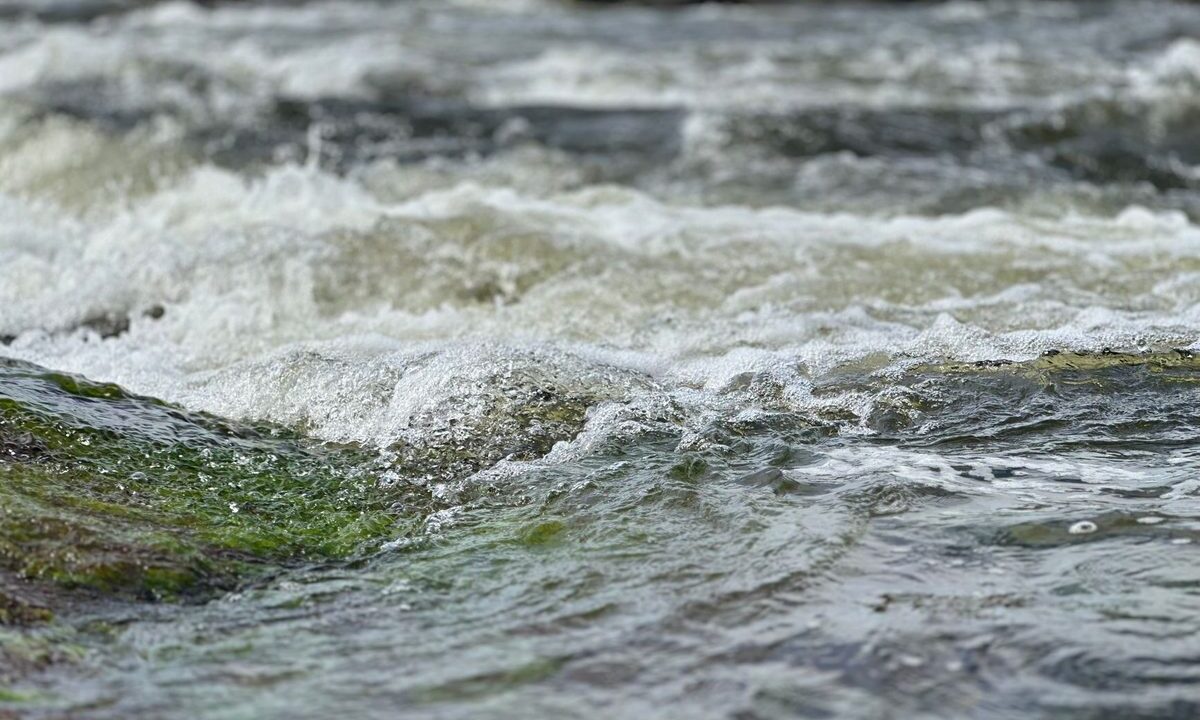
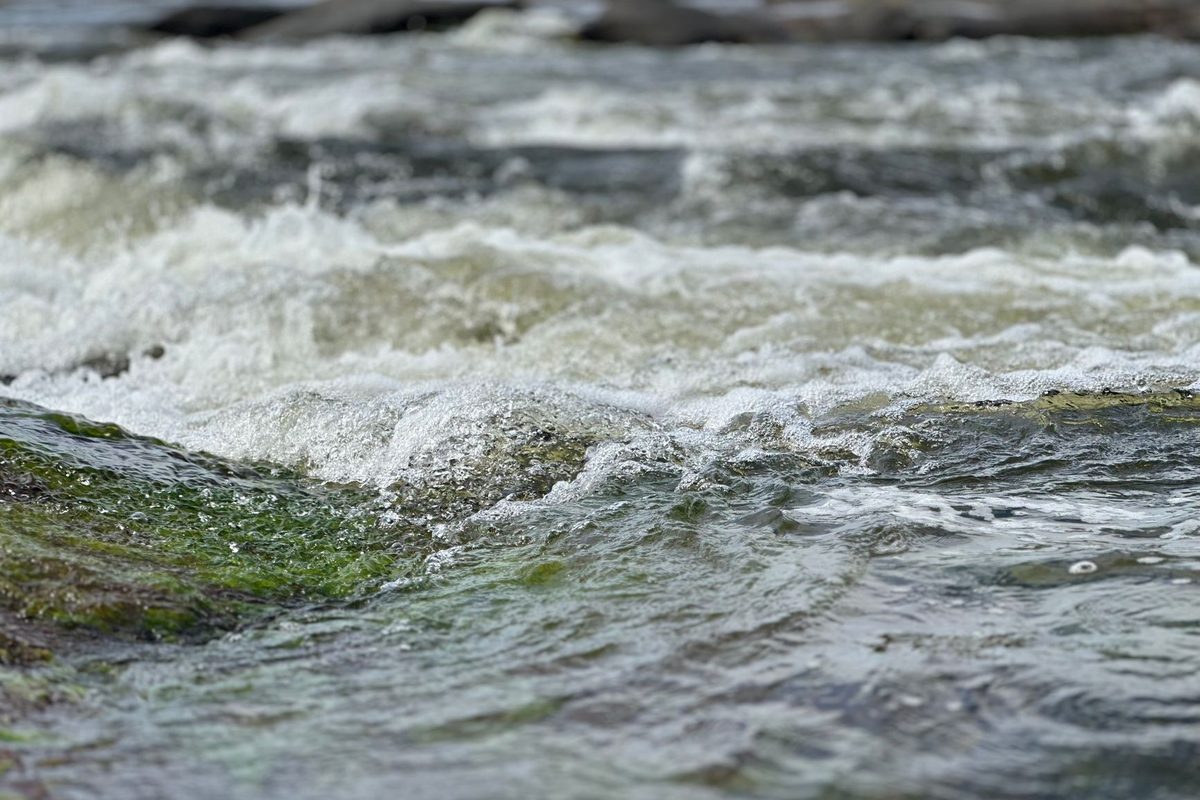
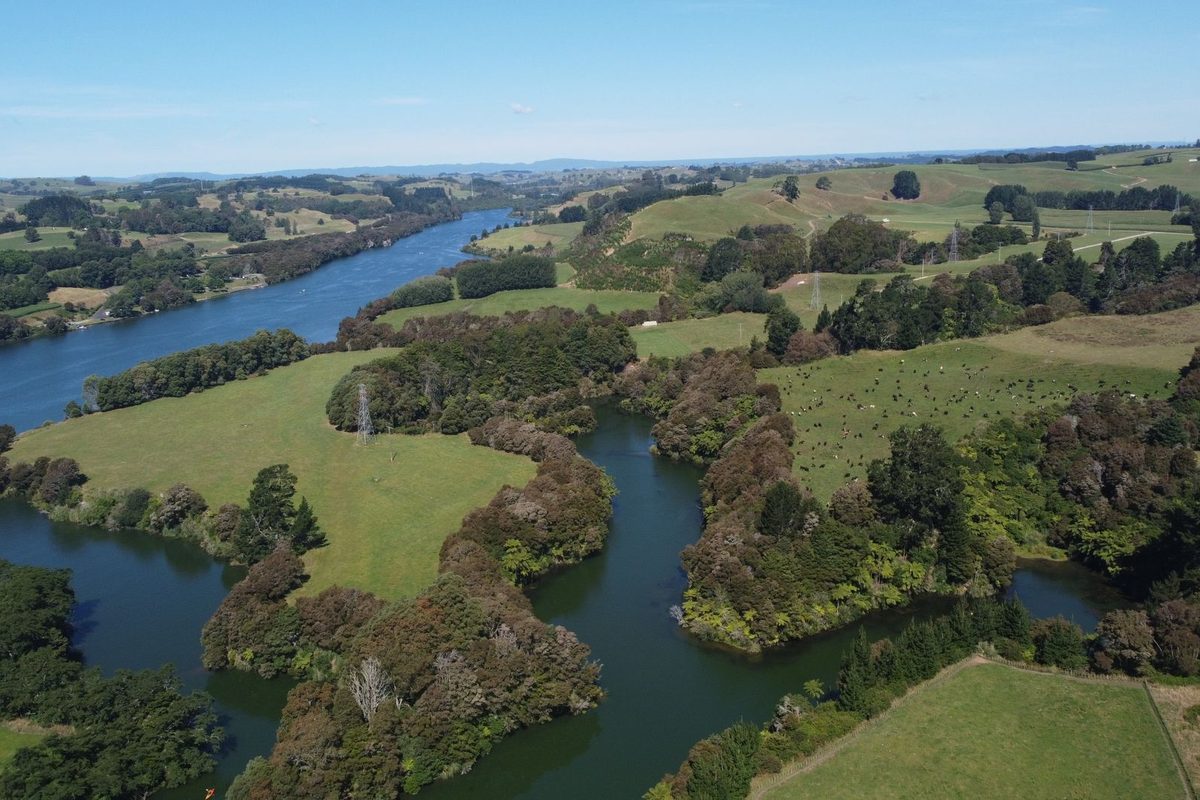
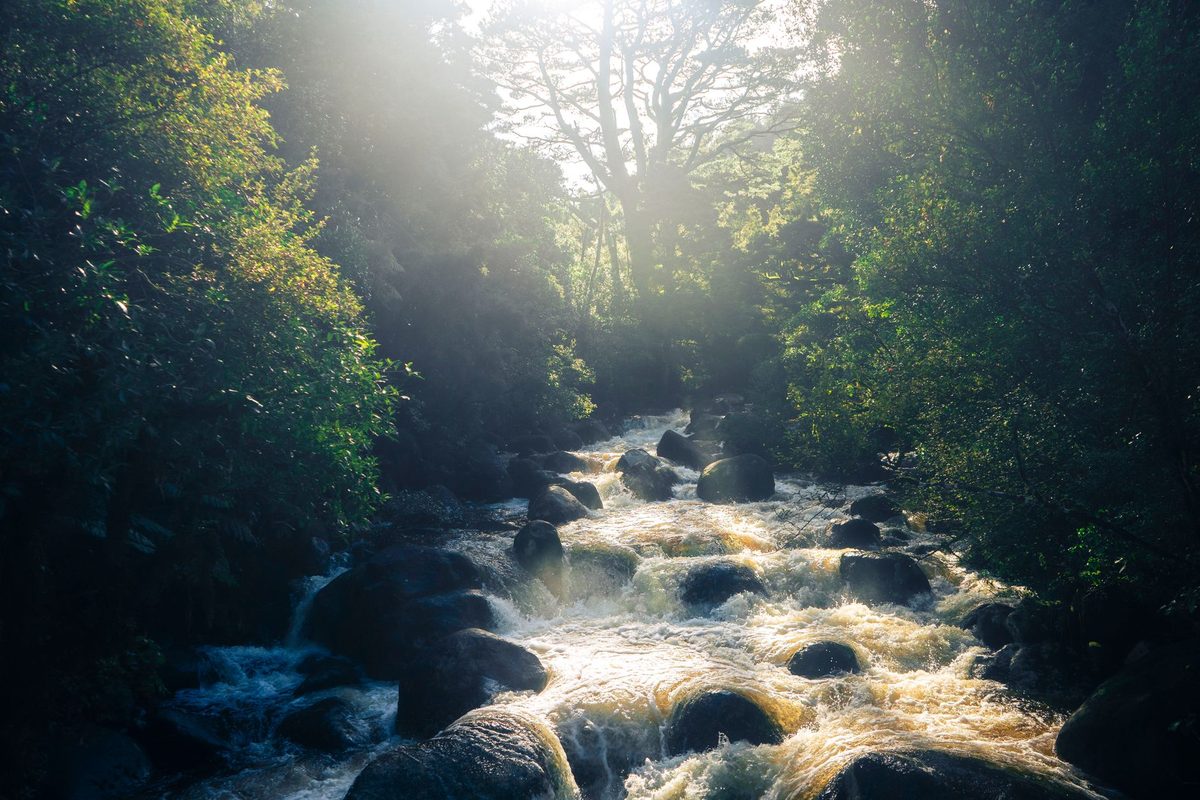
The river itself is the real subject of the walk, not just the destination. The Waikato is a deep, cold, turquoise-green flow for most of this stretch, moving fast but calmly until it hits the narrow rock channel at the falls. DOC’s own signage is blunt about safety here: sections of the track run close to a cliff edge, so stay on the formed path, keep children close, and do not treat any point along this stretch as a swimming spot. The river is genuinely dangerous this close to the falls, both from the current and from submerged rock, and locals do not swim here.
About two-thirds of the way along, the track opens onto a series of small lookouts over rapids and pale blue pools where the riverbed narrows before the main event. These are worth slowing down for. Most people walking straight through to the falls miss them because the falls themselves pull your attention forward, but the mid-walk viewpoints are quieter and, on a clear day, some of the better photo spots on the whole route because you get the river without the crowd that gathers at the main platforms.
Huka Falls itself
Lead-in: Huka Falls is not a waterfall in the classic sense but a hard narrowing of the Waikato River, which is New Zealand’s longest river, from around 100 metres wide into a channel roughly 15 metres across, forcing an estimated 220,000 litres of water per second through the gap before it drops about 11 metres into the pool below, all of it free to view from two main platforms and a footbridge, with no gate, ticket or opening hours beyond the falls car park’s overnight lock-up.
The main lookout is the road bridge itself, which most people photograph from, and a lower platform just downstream that gets you closer to the churn without the traffic noise. Both are a short, flat walk from the falls car park if you have driven straight there instead of walking the trail, which is worth knowing if you are travelling with someone who cannot manage the full 3 km walkway but still wants to see the falls.
The colour is the thing photos never quite capture: the water genuinely runs a pale, milky turquoise from dissolved rock flour and the sheer volume of aerated water, not from any artificial or mineral source. It looks different depending on rainfall upstream and time of day, generally more vivid on a bright morning than under flat grey cloud. If you are chasing photos, aim for mid-morning on a clear day and be ready for other people to be in your shot; this is one of the most visited free sights in the district and rarely empty in the middle of the day.
Hukafalls Jet boats run directly beneath the platforms as part of their standard route, so do not be surprised by the noise and the wave of onlookers turning to watch when a boat does its spin in the pool below the falls. It is a genuinely good photo moment if you time it, and free to watch even if you are not paying to ride.
Extending the walk
If 3 km each way is not enough, the track continues past the falls car park along the Aratiatia Rapids Track, adding roughly another 1.5 to 2 hours return to reach the Aratiatia Dam, where the rapids are dry most of the day and then released on a schedule (10am, 12pm and 2pm year-round, plus 4pm from October to March). Stitched together, Spa Park to Aratiatia and back is a genuinely satisfying half-day walk that stays flat, stays free, and covers two of the best free sights near town without a car.
Mountain bikers have their own parallel option: the Rotary Ride, which runs a similar line from Spa Park to Huka Falls but is signed for bikes rather than walkers, and connects into the wider Great Lake Trail network if you are travelling with a bike or have hired one for the day. Do not try to walk the Rotary Ride sections; they share some ground with the walking track but are managed and signed separately for a reason, and cyclists move quickly on the narrower bike-specific sections.
If you would rather turn this into a loop instead of an out-and-back, arrange a taxi or rideshare from the falls car park back to Spa Park, or from Spa Park back into town. Given the flat grade and short distance, plenty of backpackers just do the there-and-back, which keeps total cost at zero and total time at under two hours.
What’s overrated about it
The falls themselves are genuinely worth seeing, but the marketing language around them oversells the scale. This is an 11-metre drop through a narrow channel, not a towering cascade, and if your reference point is Southeast Asia or South America you may find it smaller than expected in person. What makes it worth the visit is the volume and speed of the water through such a tight gap, not the height, so go in expecting force rather than grandeur and you will not be disappointed.
The lower viewing platform gets uncomfortably crowded between about 11am and 3pm in summer and around any tour bus arrival, to the point where getting an unobstructed photo takes patience. If a clear shot matters to you more than convenience, walking the full track from Spa Park rather than driving straight to the car park means you arrive from the quieter side and can often get to the platform in a gap between coach groups.
Some listings talk up “hidden lookouts” along the walkway as though they are secret; they are not secret, they are simply less photographed than the main platforms, which is exactly why they are calmer. Do not expect solitude anywhere within a few hundred metres of the falls car park itself during the middle of the day.
What to skip
Skip driving straight to the falls car park if you are even moderately mobile and have a couple of spare hours; you get a fundamentally better outing by walking in from Spa Park, and you save yourself the mild letdown of arriving, taking one photo, and leaving. The walk is what turns this from a five-minute stop into something worth the trip.
Skip trying to swim anywhere along this stretch of river, including at the pools you will see partway along the track. The current below the surface is far stronger than it looks, the water is cold even in summer, and this section has a genuine history of drownings. If you want to swim, head to a proper swimming spot elsewhere on the lake rather than the river here.
Skip paying for a guided walking tour of this specific track. It is well-signed, hard to get lost on, and free to walk independently; a guide adds cost without adding much you cannot get from this page and the signage on site.
By traveller type
Solo backpackers get one of the easiest free half-days in the district here: no booking, no companion required, safe on your own during daylight, and an easy add-on to a morning at Otumuheke or an afternoon at the AC Baths. If you are working through the solo travel in Taupo guide, this walk is one of the lowest-friction items on the whole list.
Couples get genuine value from doing the full there-and-back at a relaxed pace, particularly late afternoon when the light is better and the crowds at the falls have started to thin. It is an easy, free way to spend two unhurried hours without spending a cent, which matters if you are also budgeting for something bigger like a skydive or a jet boat ride the same trip.
Families can manage this comfortably with primary-school-age kids and up; the flat grade and short distance make it realistic without turning into a battle, though the cliff-edge sections mean younger children need to be kept close and not allowed to run ahead. If travelling with very young children, driving straight to the falls car park and doing only the short platform walk is the more realistic option, and there is more on that trade-off in the Lake Taupo with kids guide.
Budget travellers should treat this as one of the anchor free activities of a Taupo stopover, alongside the geothermal soak at Otumuheke and the free viewing platform at the bungy. Pairing two or three free activities like this is how you keep a Taupo day cheap without it feeling like you are missing out, and it is covered in more depth in the free things to do in Taupo guide.
Runners and fitness-focused travellers will find the flat, well-formed surface genuinely good for an easy run, and doing Spa Park to Aratiatia and back on foot is a legitimate 10 to 12 km training day with a proper reward at both ends.
By season
Summer (December to February) brings the biggest crowds at the falls end and the warmest walking conditions; go early morning or from about 4pm onward to avoid both the heat and the tour groups. Spring and autumn are the sweet spot: mild temperatures, thinner crowds, and reliably good light for photos most days. Winter is genuinely fine for this particular walk, since it stays low and sheltered rather than exposed like Mount Tauhara or the Tongariro Alpine Crossing, though June is the wettest month of the year here and a rain jacket is worth carrying regardless of forecast, given the district gets roughly 1,100 to 1,350 mm of rain a year spread over about 125 days.
Whatever the season, the river’s colour and volume shift with recent rainfall upstream, so a walk after a wet week generally looks more dramatic at the falls than a walk during a dry spell, even though the underlying track conditions barely change either way.
A costed sample day around the walk
Start with a free soak at Otumuheke Stream in the morning (free, gates open 7am), dry off and walk the roughly 25 to 35 minutes from town or the stream up to Spa Park, then do the Huka Falls walk there and back (free, 1.5 to 2 hours total). From the falls car park, grab a coffee at the on-site cafe (roughly NZ$5 to 7 for 2026), then either walk back the way you came or take a short taxi back into town (typically NZ$15 to 25 depending on the operator and time of day). That is a genuinely full, satisfying half-day for well under NZ$20 per person including a coffee, which is hard to match anywhere else on this daily cost breakdown for Lake Taupo.
If you want to build a bigger day around it, add the Aratiatia Rapids release (free, catch one of the four daily release times) in the afternoon, which is an easy add-on if you have your own transport, since there is no bus route out there.
Safety and etiquette
The main risk on this walk is the river, not the track. Stay behind barriers and off the cliff edges at the lookout points, particularly with kids or after rain when the ground can be slippery. Do not attempt to swim, wade, or climb down to the water’s edge anywhere along this stretch; the current below the surface moves far faster than the surface appearance suggests, and this section of the Waikato has a documented history of drownings. If you are walking early or late in the day, a headtorch is sensible in winter when daylight is shorter, since the last stretch back to Spa Park has patchy tree cover that gets dark quickly at dusk. General trip safety, including river and geothermal hazards specific to this district, is covered in the Taupo safety tips guide.
How this fits into a wider Taupo itinerary
If you are only in Taupo for one or two nights, the Huka Falls walk is one of the highest-value, lowest-cost items you can slot in, and it fits naturally into a 3-day Taupo itinerary as a half-day activity on either end of a longer adventure day. If you have longer, it pairs well with a full day of geothermal sights covered in the geothermal attractions guide, and it is one of the easiest wins in the must-do experiences in Taupo list precisely because it costs nothing and rarely disappoints. If you are working from a longer 5-day itinerary or a full 7-day Taupo itinerary, this is worth doing early, since the fitness demanded is minimal and it leaves you fresh for bigger days like the Tongariro Alpine Crossing later in the trip.
It also sits comfortably alongside bigger-ticket adventure activities nearby. If you are budgeting for a skydive or the bungy, both reachable within a few minutes of the falls, the walk is a genuinely free way to fill the rest of the day without feeling like you skimped, and it is a natural stop on the way to or from anything covered in the Taupo adventure activities guide. Anyone planning their first visit from scratch should start with the wider how to plan a backpacking trip to Lake Taupo guide and slot this walk in once the framework of the trip is set, then check current conditions against the Taupo weather guide before you commit to a specific day, and time your visit using the broader best time to visit Taupo guide if crowd levels matter to you.
For a full day that stays local and mostly free, combine this walk with a stop at the Lake Taupo Maori history and culture guide to understand the wider landscape you are walking through, then finish with something to eat back in town using the Taupo food and dining guide. If fishing is more your speed than hiking, the Lake Taupo fishing guide covers the river sections downstream of the falls, which are a completely different proposition to the protected water right at the falls themselves. Whatever else is on your list, check current listings in the Lake Taupo backpacking guide before you lock in logistics, and if this is your first Taupo hike, pack accordingly using the Taupo packing list, since even an easy walk like this benefits from decent shoes and a water bottle.
Frequently asked questions
How long does the Huka Falls walk take?
Walking from Spa Park to Huka Falls takes 45 to 60 minutes each way at a relaxed pace, so budget 1.5 to 2 hours for the full there-and-back including a stop at the falls themselves. Add another 1.5 to 2 hours if you continue on to Aratiatia Rapids.
Is the Huka Falls walk free?
Yes, the entire walk is free, there is no entry fee to view Huka Falls, and parking is free at both the Spa Park and Huka Falls car parks. The only cost that can catch you out is a $30 release fee if your car is still in the Huka Falls car park after it locks at 5:30pm.
Can you swim at Huka Falls?
No. The Waikato River is deep, fast-flowing and genuinely dangerous along this entire stretch, and swimming is not safe anywhere near the falls, the walkway, or the pools you pass along the way. If you want to swim, use a proper lake swimming spot rather than this section of river.
Is the Huka Falls walk suitable for kids or prams?
It is manageable for most primary-school-age children walking under supervision, since the grade is flat and the distance is short, but there are cliff-edge sections that need close supervision. It is not officially a pram-friendly track; a robust all-terrain pram can handle most of it but expect some rough patches and tree roots.
Do you need to book anything for the Huka Falls walk?
No booking, permit or registration is required. It is an open-access DOC walking track available any time the car parks are unlocked, which is 8:30am to 5:30pm for the Huka Falls end, with no equivalent restriction at the Spa Park end.
Can you walk from Huka Falls to Aratiatia Rapids?
Yes, the Aratiatia Rapids Track continues north from the Huka Falls car park, adding roughly 1.5 to 2 hours return. It is a natural extension if you want a fuller half-day walk and want to time your arrival with one of the scheduled rapids releases at Aratiatia.
Final Thoughts
The Huka Falls walk earns its place near the top of any Taupo hiking list because it delivers a genuinely good outing for zero dollars and minimal fitness, which is a rare combination anywhere in this district. Walk it from Spa Park rather than driving straight to the car park if you have the time; the river along the way is at least as good as the falls themselves, and arriving on foot puts you at the platforms from the quieter side.
It is not a wilderness experience and it will not be empty in the middle of a summer day, but for the cost, the time commitment, and the fact that it needs nothing more than decent shoes, it belongs on almost every Taupo itinerary, long or short.
Back to the main guide: see the full Lake Taupo hiking and walks guide for every other trail in the district, from short riverside strolls like this one to the multi-day Tongariro Northern Circuit.