The Craters of the Moon walk is a 40 to 60 minute boardwalk loop through an active geothermal field just north of Taupo, and unlike a lot of what gets recommended in this town, it costs money: NZ$10.20 for an adult and NZ$5.10 for a child aged 5 to 15 in 2026, not free, whatever a five-year-old blog post or aggregator listing might tell you. It is one of the best-value paid attractions in the district for that price, and it belongs on the same shortlist as the rest of the hiking and walks around Lake Taupo, even though it is geothermal ground rather than a conventional trail.
What Craters of the Moon actually is
Craters of the Moon sits within the Taupo Volcanic Zone, one of the most geologically active stretches of ground in New Zealand, running from Ruapehu and Tongariro in the south up to White Island in the Bay of Plenty. The field itself is relatively young by geothermal standards. Steam vents, mud pools and fumaroles began appearing at the surface here in the 1950s, after nearby bore development for the Wairakei geothermal power station altered underground pressure and pushed steam and hot water up through new cracks in the ground. The area has kept changing since, with new vents opening and old ones cooling, which is part of why the operator describes it as a constantly evolving landscape rather than a fixed sightseeing stop.
It is run today by the Craters of the Moon Trust, a charitable trust, in partnership with Contact Energy, and ticket revenue goes toward maintaining the boardwalks and the site rather than to a private operator’s profit margin. That matters a little for how you think about the entry fee: this is closer to a conservation reserve with an admission charge than a commercial attraction.
Before there was a formal visitor centre, the site was run by volunteers operating out of a campervan parked near the entrance, which gives some sense of how informal this attraction was originally compared to the fully boardwalked, ticketed operation you will visit today. The underlying geothermal activity itself is much older, part of a system that has been evolving for more than 700 years, but the specific vents and craters visible now are largely a mid-20th-century phenomenon, a reminder that this landscape is still actively rearranging itself rather than being a fixed, ancient feature like the lake itself.
Lead-in: adult entry is NZ$10.20, senior and child aged 5 to 15 is NZ$5.10, a family pass covering 2 adults and up to 4 children is NZ$25.50, children under 5 go free, and Taupo locals get half price with proof of address, the site is open 364 days a year from 9:30am to 5pm with last entry strictly at 4pm and it only closes on Christmas Day, the main walkway is a 40 minute loop rated easy and suitable for most fitness levels, and it sits about 10 minutes or 5.5 kilometres north of central Taupo just off State Highway 1 in Wairakei Park.
The walk itself
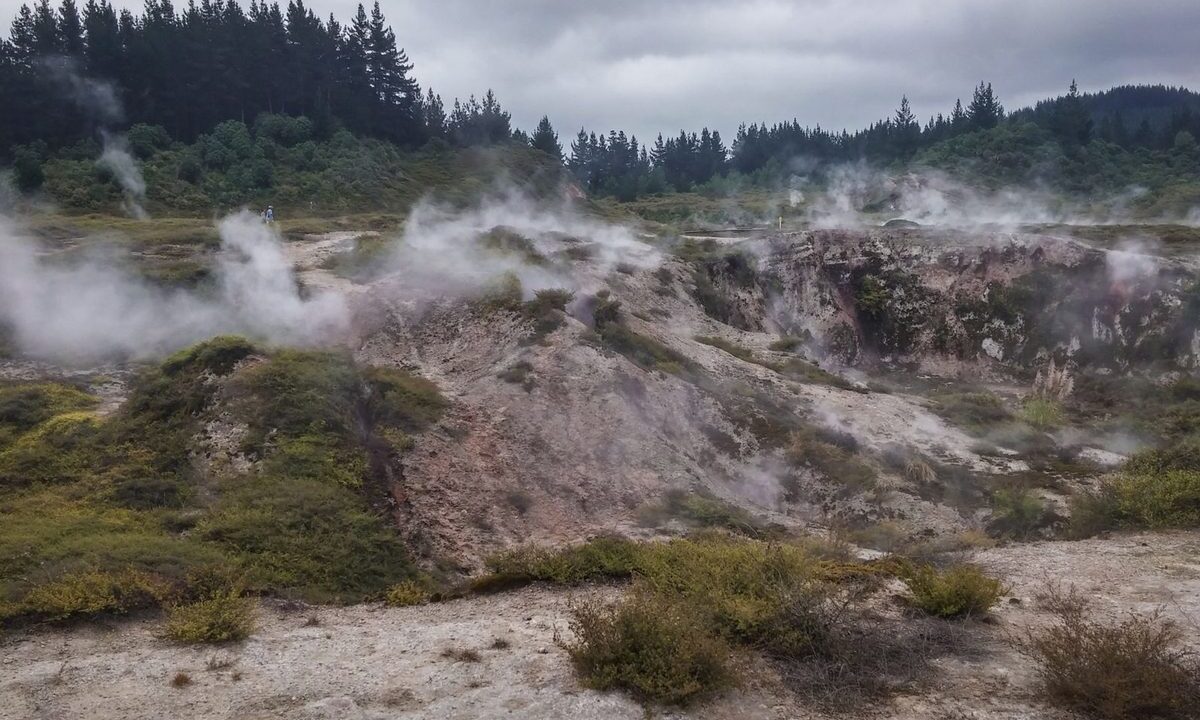
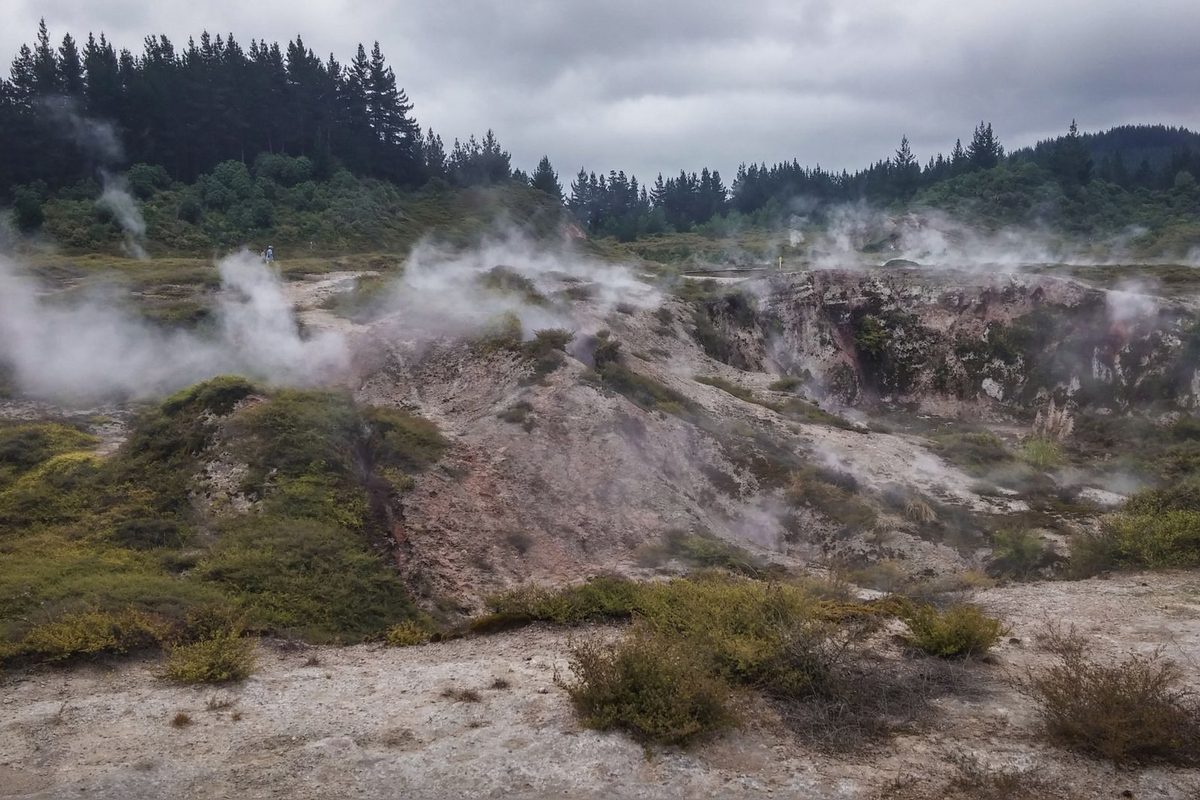
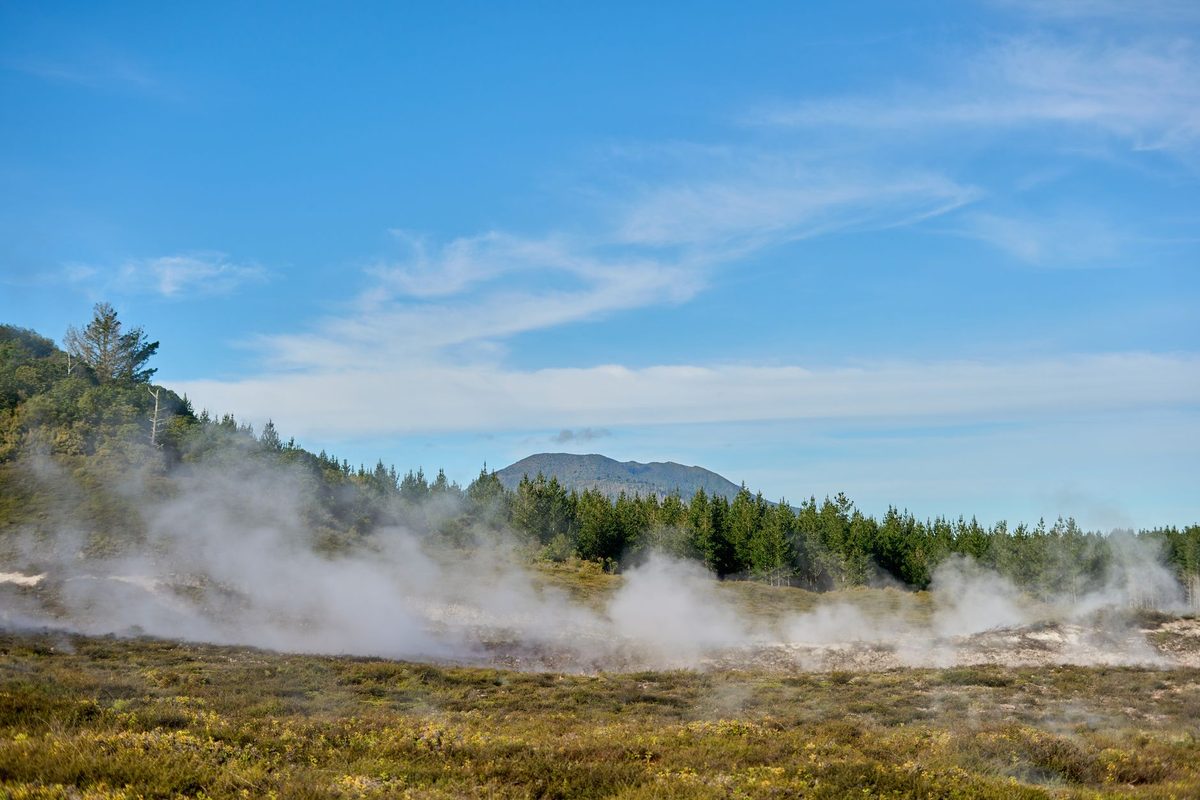
The main walkway is a 40 minute loop on a mix of fine gravel path and wooden boardwalk, and it is genuinely easy: flat grade, well maintained, and described by the operator as suitable for most people of all ages. You will walk past steaming fumaroles, bubbling mud pools, and the site’s main crater, which measures 40 metres across and is hard to miss even from a distance thanks to the steam it throws up. Information panels are placed at regular intervals explaining what you are looking at and why the ground behaves the way it does, which is worth actually reading rather than skimming past, since the geology here is genuinely unusual rather than generic hot-pools-and-steam scenery.
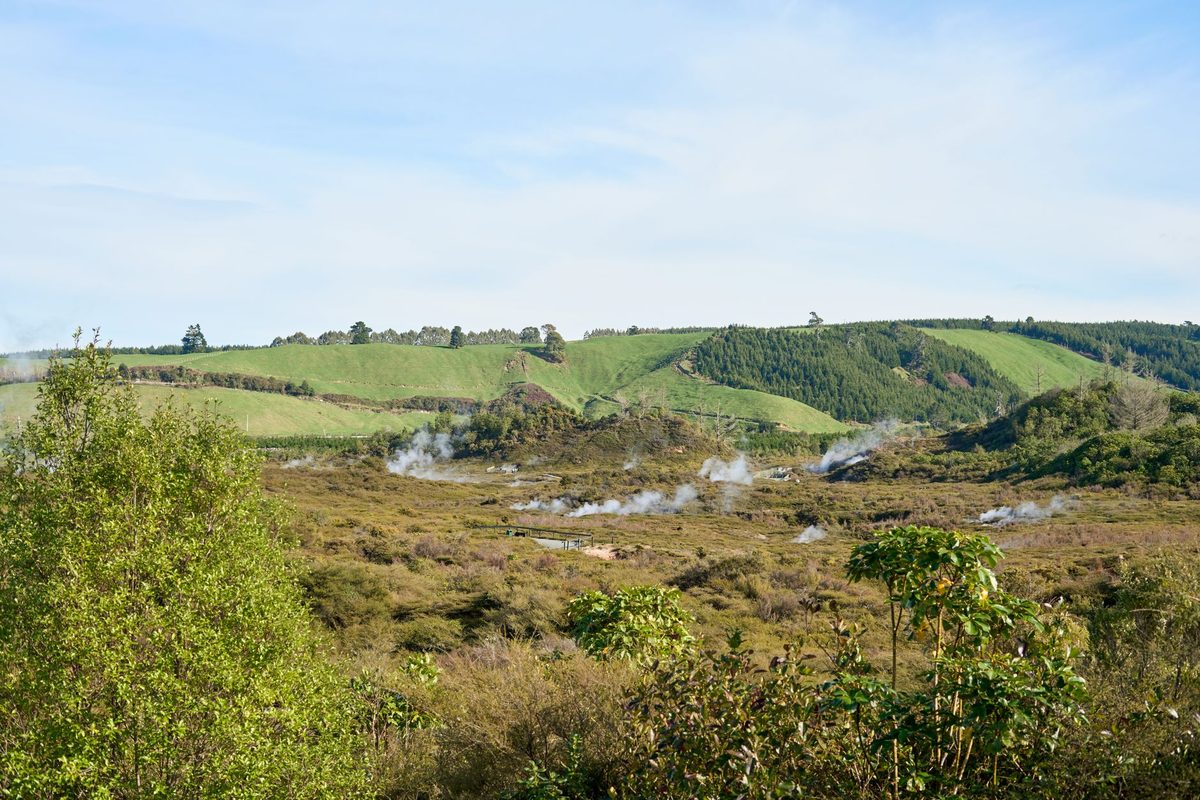
If you have the extra twenty minutes, the upper walkway to the lookout is worth doing. It adds about 20 minutes to the main loop, is rated moderate rather than easy, and involves a reasonable number of steps, but it rewards the climb with a panoramic view over the whole geothermal field and the surrounding pine-covered hills that you simply do not get from the flat main loop. Most visitors who skip it do so because they did not realise it was there rather than because they decided against it, so budget the extra time if you can.
There is also a small daily ritual worth timing your visit around: bird feeding happens every day at 10am near the kiosk, and native bird food is available for sale if you want to take part. It is a minor thing, but it is a nice reason to aim for a mid-morning visit rather than an afternoon one if your schedule is flexible.
What your ticket actually covers
A single entry fee covers the main walkway, the upper lookout track, the informational signage throughout, and access to the visitor centre and restrooms, with no separate charge for the lookout or any part of the boardwalk network. Tickets can be bought at the on-site kiosk when you arrive or in advance through the operator’s own website, and neither option costs more than the other; buying ahead simply avoids waiting behind other visitors on a busy day. There is no time limit attached to your entry beyond the closing time itself, so you are free to walk slowly, stop repeatedly for photos, and read every information panel without feeling rushed to get your money’s worth.
What’s overrated about it
If you have already been to Rotorua’s bigger geothermal parks, Wai-O-Tapu in particular, do not expect Craters of the Moon to top that experience in terms of colour. Wai-O-Tapu has the famous Champagne Pool and vivid mineral terraces in yellow, orange and green; Craters of the Moon is greyer, starker, and more about scale and steam than colour. What it has instead is proximity, price, and speed: you can do the whole thing in under an hour without leaving the Taupo district, which none of the Rotorua parks can match if you are staying in Taupo. Go in expecting a stark, steaming, slightly lunar landscape, not a rainbow of mineral pools, and it delivers exactly what it promises.
The gift shop and kiosk are pleasant but skippable if you are on a tight budget. Prices are set for tourists, and nothing there is meaningfully different from souvenirs available elsewhere in town through the wider things to do in Taupo options, so treat it as a bonus rather than a reason to visit.
What to skip
Skip bringing your dog. Dogs are not permitted anywhere on site, no exceptions, which catches out more visitors than you would expect given how dog-friendly the rest of Taupo tends to be. Skip smoking or vaping on the boardwalks too; the whole site is smokefree and vapefree by policy, not just convention.
Skip visiting right after heavy rain if you specifically wanted to see mud activity at its most dramatic. Mud pool visibility and intensity shift with the seasons and with how saturated the ground is, and the operator’s own guidance notes that mud is generally more visible outside the height of summer. If seeing bubbling mud specifically is the point of your visit, a wetter shoulder-season day tends to deliver more than a dry midsummer one.
Photography and the best time of day
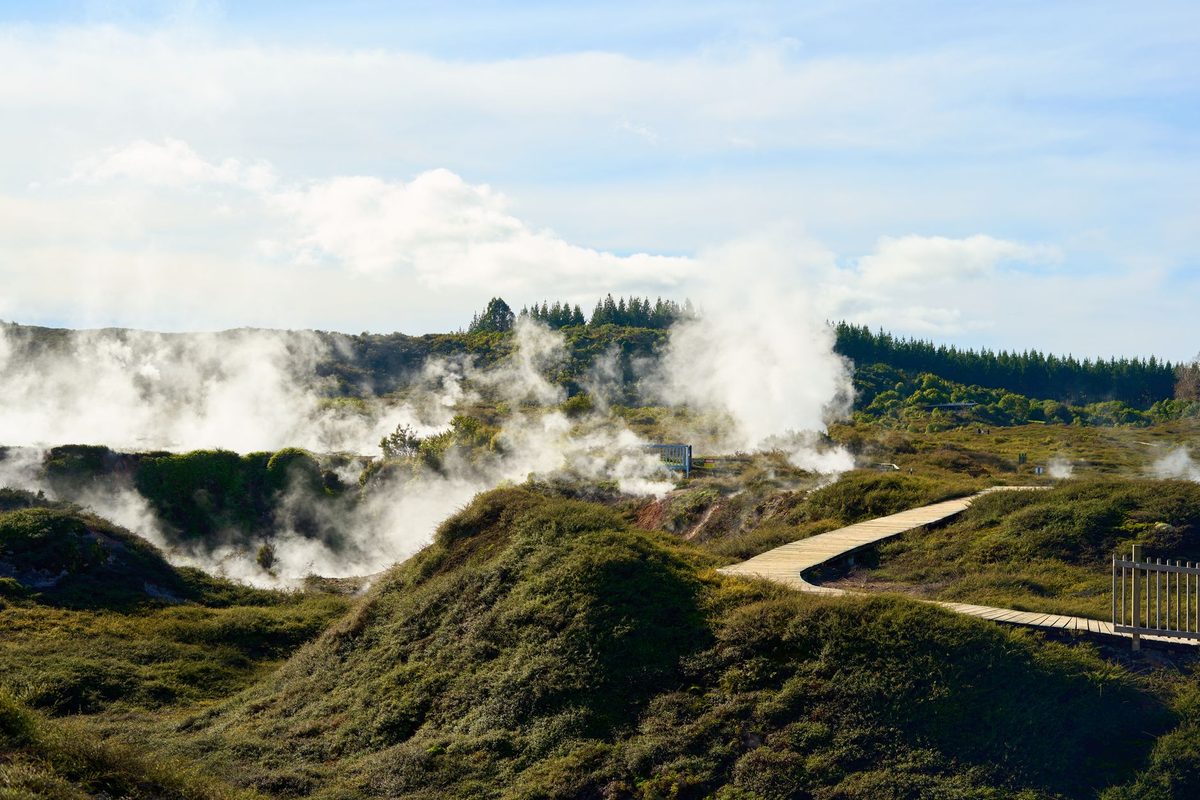
Cool mornings produce the most dramatic steam, since the temperature difference between the geothermal vents and the surrounding air is at its widest shortly after sunrise, before the day warms up. If dramatic, thick steam columns rising against the sky are what you are after, an early visit, ideally in the first hour or two after opening, delivers noticeably more than a midday one, when the same vents can look comparatively thin and washed out in flat, bright light. Overcast days work in the walk’s favour too, since diffused light picks up the texture of the bleached, mineral-stained ground better than harsh midday sun does.
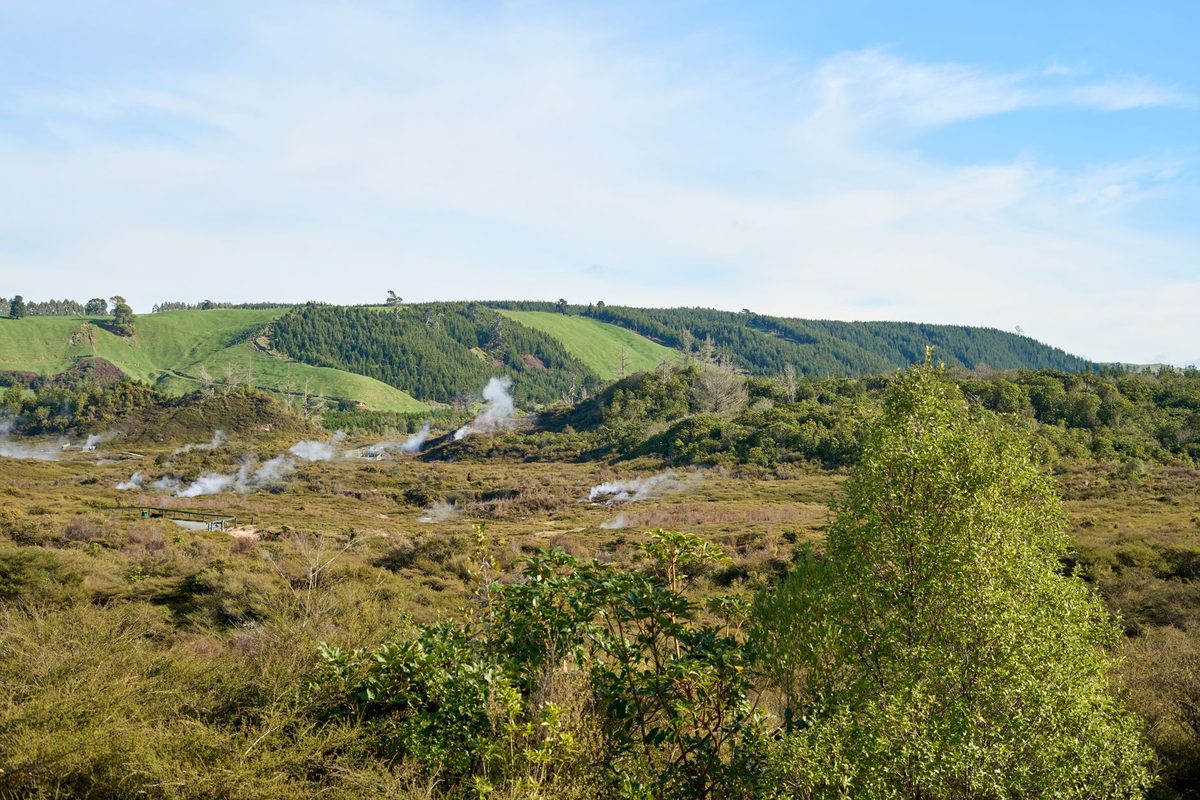
The main crater is the obvious photo stop, but do not skip the upper lookout if photography is a priority. It is the only point on the walk that gives you the whole field in one frame, steam columns, boardwalk, and the pine-covered hills beyond, rather than the closer, more fragmented views you get from ground level on the main loop.
Craters of the Moon by traveller type
Backpackers and budget travellers
At just over NZ$10, this is one of the cheapest genuine geothermal experiences in the wider Taupo and Rotorua region, and it fits easily into most daily backpacking budgets without derailing anything. If you are choosing between this and a full-price geothermal park elsewhere and money is tight, this is the one to prioritise; you will not get the same colour, but you will get the core experience, steaming ground and bubbling craters, for a fraction of the cost.
Solo travellers
The main loop is well trafficked enough that walking it solo never feels isolated, and the flat, well-signed boardwalk means navigation is a non-issue. It is an easy, low-stakes solo outing to slot into a morning, and it pairs naturally with the general advice in the solo travel guide about picking well-visited, well-maintained sites when you are exploring alone.
Families
The main walkway is genuinely manageable for young kids, the paths are described as suitable for strollers, and the daily bird feeding at 10am gives children something concrete to look forward to beyond just walking past steam. The steep, stepped upper walkway is the one part to think twice about with a pushchair or very young children; stick to the main loop if that describes your group. The Lake Taupo with kids guide covers how this compares to the district’s other family-friendly stops.
Visitors with mobility considerations
The main 40 minute loop is flat, well maintained, and suitable for wheelchairs and strollers according to the operator, which is not something you can say for most geothermal sites in New Zealand, many of which involve slopes or rough ground. The upper walkway to the lookout is the exception, with its steps and moderate grading, so plan around the main loop if mobility is a concern and treat the lookout as a bonus for those who can manage it.
Craters of the Moon by season
The site is open 364 days a year, so season matters less here than at most Taupo attractions, but conditions still shift. Summer brings the biggest crowds and the clearest photography conditions, with steam standing out sharply against blue sky, though little of the walkway has shade so a hat and water matter even for a 40 minute loop. Winter is quieter, colder, and arguably more atmospheric: steam shows up more dramatically against cold air, and the crowds thin out noticeably on weekdays. Check the Taupo weather guide before a winter visit, since the boardwalks can be slippery after frost or rain.
Spring and autumn split the difference, and as noted above, wetter shoulder-season conditions tend to show off the mud pools at their most active. For a wider view of when to time a Taupo trip around weather and crowds generally, the best time to visit guide covers the seasonal trade-offs across the whole district, not just this one site.
Rainfall itself is rarely a reason to cancel a visit, since the entire main loop is boardwalked and the steam and mud are, if anything, more visually striking against a wet, grey backdrop than a dry one. The one genuine weather consideration is wind: a strong breeze can blow steam sideways across the boardwalk in a few exposed spots, which is a minor inconvenience rather than a safety issue, but worth knowing if you are hoping for clean, steam-free photos of the craters themselves.
A costed sample day around the walk
Craters of the Moon pairs naturally with a half-day loop north of town rather than standing alone, since it sits close to several of the district’s other free attractions. Morning: entry to Craters of the Moon and the full loop including the upper lookout, NZ$10.20 per adult, about 60 minutes. Late morning: walk or drive the short distance to Huka Falls, free, no parking charge, 20 to 30 minutes including photos. Midday: a packed lunch from a supermarket rather than the on-site kiosk, NZ$8 to 10. Early afternoon: time the Aratiatia Rapids dam release, free, at 10am, midday, 2pm, or 4pm depending on the season. Late afternoon: coffee back in town, NZ$5 to 8. Total for the day: roughly NZ$23 to 28 per adult, which covers one paid attraction and two free ones in a single half-day loop, making it one of the better value days you can build in Taupo.
Getting there and practical details
Craters of the Moon sits at 140 Karapiti Road in Wairakei Park, about 10 minutes or 5.5 kilometres north of the Taupo iSite. Coming from town, head north on Wairakei Drive and turn left onto Karapiti Road, then follow it 1.7 kilometres to the car park at the road end. Coming from the north, Auckland, Hamilton or Rotorua direction, take the Wairakei Park exit at the State Highway 1 and 5 roundabout, follow Wairakei Drive, and take care turning right across the highway into Karapiti Road when the sign appears. There is no public transport route running directly to the site, so you will need a car, a bike, a taxi, or a booked shuttle; the getting around Taupo guide covers your options if you do not have your own vehicle. Parking on site is ample and free with entry.
Tickets can be bought at the kiosk on arrival or online in advance through the operator’s own website; pre-booking is not required outside of peak periods, but buying ahead avoids any queue at the entrance on a busy day. The site has clean restrooms, a small visitor centre, and a gift shop, all clustered near the car park and entrance.
If you are driving yourself and plan to combine the visit with other stops in Wairakei Park, note that Karapiti Road is a dead end serving only the car park, so there is no through route to loop back onto Wairakei Drive at a different point. You will need to backtrack the same 1.7 kilometres to rejoin the main road before continuing on to Huka Falls, Aratiatia, or back into town, which adds only a couple of minutes but is worth factoring in if you are timing a dam release or another scheduled stop tightly.
Safety and practical tips
Stay on the boardwalks and marked paths the entire time. This is not a scenic suggestion; the ground around active fumaroles and mud pools can be unstable and the water and mud are genuinely hot enough to cause serious burns, which is exactly why the whole route is boardwalked rather than left as open ground. The general safety tips for Lake Taupo apply here as much as anywhere in the district: do not let children run ahead unsupervised, and treat any fenced or roped-off area as off-limits rather than a photo opportunity.
Bring a light layer even in summer. The boardwalk crosses open, largely unshaded ground, and while the geothermal heat rising from the vents can make pockets of the walk feel warmer than the surrounding air, wind off the open field can also make it feel cooler than expected. A day pack with water and sunscreen, covered in more detail in the general packing list guide, is all you need for the walk itself.
Expect a faint sulphur smell across parts of the site, stronger near the larger fumaroles and mud pools than elsewhere on the loop. It is a normal feature of any active geothermal field and not a sign of anything wrong, but it catches first-time visitors off guard often enough that it is worth mentioning before you go rather than after. It fades quickly once you are back at the car park, and most people stop noticing it within the first few minutes of the walk.
How it compares to Taupo’s other geothermal stops
Craters of the Moon is the most accessible paid geothermal walk in the immediate Taupo area, but it is one option among several covered in the broader geothermal attractions guide, which also covers the free thermal bathing spots and other paid sites in the district. If you only have time or budget for one geothermal stop and want a walk rather than a soak, this is the one to pick over driving to Rotorua; if soaking in hot water is more the point than looking at steaming ground, the free options covered in the free activities guide are the better use of your time and money.
It also sits close enough to the town centre that it is easy to combine with a gentler, non-geothermal walk on the same trip. If you did the flat lakefront Great Lake Walkway the day before, Craters of the Moon is a good change of pace: shorter, more concentrated, and geologically the opposite kind of landscape, steaming volcanic ground rather than open lake.
Nearby stops worth combining with the walk
Wairakei Park, the wider area Craters of the Moon sits within, holds a cluster of other stops that make sense to combine with your visit rather than driving back into town in between. The Wairakei geothermal power station has a public lookout over its steam field a short drive further along Wairakei Drive, free to visit and a useful comparison point since it shows the managed, industrial side of the same geothermal system that created Craters of the Moon naturally. Huka Falls and the Huka Falls walkway sit a few minutes away in the other direction, and Aratiatia Rapids, with its scheduled dam releases, is close enough to fit into the same half-day loop without much backtracking. None of this needs to be booked in advance or done in a fixed order, which is part of why this corner of the district is one of the easiest areas in Taupo to fill a half-day around, whatever the weather is doing.
Fitting it into a wider Taupo itinerary
Craters of the Moon is one of the easiest attractions in Taupo to fit around other plans, since the visit itself rarely takes more than an hour and the site is open essentially every day of the year. It sits comfortably on a half-day loop with Huka Falls and Aratiatia Rapids, both free and both a short drive away, which is one of the better day trips from Taupo if you are working with limited time. Backpackers building out a full Lake Taupo trip plan tend to group it with these other Wairakei-area stops rather than treating it as a standalone outing, since they are all within a few minutes’ drive of each other.
If you are staying centrally, most accommodation covered in the where to stay in Taupo guide puts you within a short drive of the site, and combining the visit with lunch or dinner options from the food and dining guide on the way back into town rounds out a full but inexpensive half-day. For context on the wider volcanic landscape you are walking through, the history and Maori culture guide covers the deeper geological and cultural background of the Taupo Volcanic Zone that this walk sits within, and the general backpacking Lake Taupo guide is worth a read if this is your first stop in the district and you have not yet planned the rest of your visit.
Solo hikers with an appetite for the district’s bigger adventure activities often use Craters of the Moon as a low-effort rest-day outing between more demanding days, since it asks so little of you physically while still delivering a genuine, memorable landscape.

Frequently asked questions
Is Craters of the Moon in Taupo free?
No. Adult entry is NZ$10.20 and child entry, ages 5 to 15, is NZ$5.10 as of 2026, with a family pass at NZ$25.50 for 2 adults and up to 4 children. Children under 5 are free and Taupo locals get half price with proof of address. Older listings that describe it as free are out of date.
How long does the Craters of the Moon walk take?
The main boardwalk loop takes about 40 minutes and is rated easy. Adding the upper walkway to the lookout brings the total to roughly 60 minutes and involves a moderate climb with steps, but rewards you with a panoramic view over the whole geothermal field.
What are the opening hours for Craters of the Moon?
It is open 364 days a year, closing only on Christmas Day, from 9:30am to 5pm with last entry strictly at 4pm. There is no need to pre-book outside peak periods, though buying tickets online in advance avoids any queue at the kiosk.
Are dogs allowed at Craters of the Moon?
No. Dogs are not permitted anywhere on the site, and the whole walkway is also a smokefree and vapefree zone.
Is Craters of the Moon suitable for wheelchairs and pushchairs?
The main 40 minute loop is flat, well maintained, and suitable for wheelchairs and strollers. The upper walkway to the lookout is the exception, since it is rated moderate and involves a number of steps, so it is not accessible in the same way as the main loop.
Is Craters of the Moon worth it compared to Rotorua’s geothermal parks?
For proximity and price, yes. It costs a fraction of the entry fee at Rotorua’s bigger parks like Wai-O-Tapu and takes under an hour, without leaving the Taupo district. For colour and variety, Rotorua’s parks generally offer more, including features like brightly coloured mineral pools that Craters of the Moon does not have. Choose Craters of the Moon if you want a quick, cheap, genuine geothermal walk without a day trip to Rotorua.
One more thing worth knowing before you go: drone use is not permitted on site without prior written approval from the trust, so leave it in the car if you were planning aerial shots of the field. It is a minor restriction in practice, since the upper lookout already gives you most of the elevated view a drone would offer, but it catches out a handful of visitors every season who assume an open geothermal field is fair game for flying.
Final Thoughts
Craters of the Moon earns its place on a Taupo itinerary by being fast, cheap relative to what it delivers, and genuinely unlike anything else in the immediate district. It will not out-colour Rotorua’s best-known parks, and it should not be marketed or expected as free, but for just over ten dollars and an hour of your time, a stark, steaming, still-evolving geothermal field is hard to beat. Do the main loop at minimum, add the upper lookout if you have the extra twenty minutes, and pair it with Huka Falls and Aratiatia Rapids to make a full, inexpensive morning of it.
Back to the main guide: for the full range of trails around the lake, from this short geothermal walk to the multi-day Tongariro Northern Circuit, see the complete hiking and walks guide to Lake Taupo.