The Tongariro Northern Circuit is one of New Zealand’s ten Great Walks, a multi-day loop through the volcanic heart of Tongariro National Park, and for the 2026/27 season it is not the full loop most guidebooks still describe. A section of track between Whakapapa Village and Mangatepopo has been closed since the 2025 Tongariro fire, so the Great Walk currently runs one way, from Mangatepopo Carpark to Whakapapa Village, at 35.5 km instead of the traditional 44.9 km circuit. If you’re planning this hike from a base at Lake Taupo, this guide covers the current route, the real hut and campsite costs, and how it fits into a wider trip using our Taupo hiking and walks guide.
This is not a walk to book on a whim. It passes through the same alpine terrain as the Tongariro Alpine Crossing, sits inside an active volcanic hazard zone, and the Department of Conservation classifies it as intermediate to expert depending on conditions. Most of what follows is drawn directly from DOC’s current track information, cross-checked in August 2026, because a lot of older blog posts and tour operator pages still describe the pre-2025 route and pre-2026 pricing. If this is one stop in a longer trip, fold it into your wider Lake Taupo backpacking plan and read our general Taupo safety tips before you go, since several of them apply directly to alpine terrain like this.
What the Tongariro Northern Circuit Actually Is
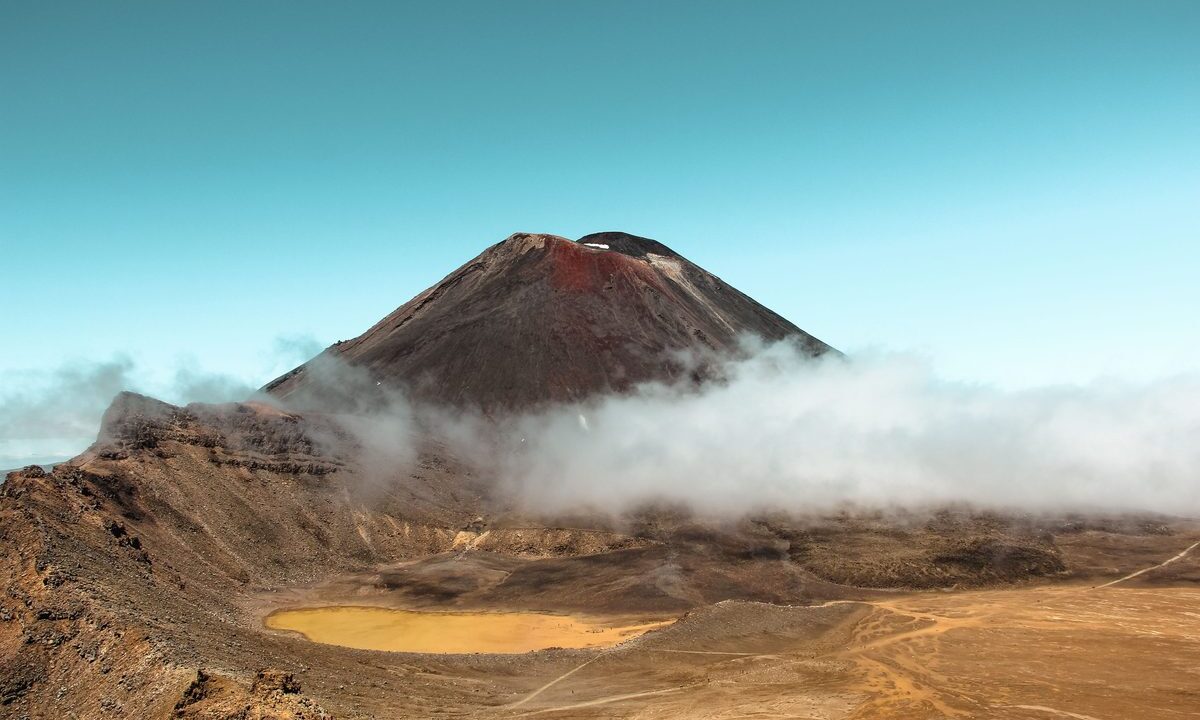
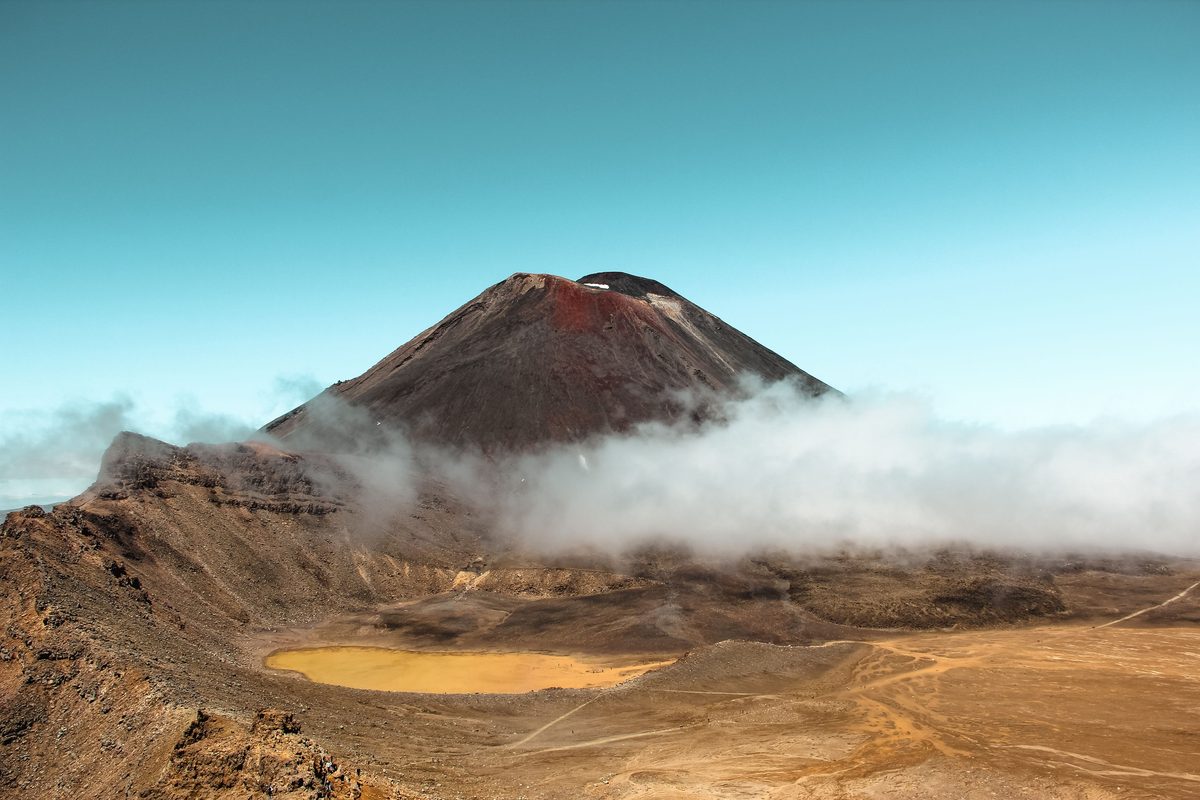
The circuit loops around Mount Ngauruhoe, taking in the same volcanic plateau, crater lakes and lava fields as the one-day Tongariro Alpine Crossing, then continuing past Oturere Valley and Waihohonu to Whakapapa Village. Most people walk it over three to four days, staying in Department of Conservation huts or camping beside them. Very fit trampers can do it in two days with two long eight-hour-plus days, but that turns a scenic multi-day walk into an endurance exercise and you’ll see almost nothing you couldn’t see on a day trip.
Lead-in: the track is entirely inside Tongariro National Park, a dual UNESCO World Heritage site for both natural and cultural values, the terrain is open, exposed and volcanic for almost its entire length, mobile coverage is patchy and effectively absent at Waihohonu Hut, and the two peaks visible for most of the walk, Ngauruhoe and Tongariro, are sacred to Ngati Tuwharetoa, the iwi who gifted the mountains to New Zealand as a national park in 1887; DOC and the iwi both ask that you don’t climb to either summit, even though unofficial tracks exist. Our Lake Taupo Maori history and culture guide covers this background in more depth if you want context before you set off.
If you only have a day and not three, the same landscape, minus Oturere and Waihohonu, is covered by the Tongariro Alpine Crossing, a one-way 19.4 km day walk that’s free to walk and requires only a track registration and a shuttle booking. It’s a completely different logistical undertaking from the Northern Circuit and worth understanding as a separate option before you commit to hut bookings. This hike is regularly named among the region’s must-do experiences, and it sits alongside dozens of other entries on our broader things to do around Lake Taupo list if you want to see how it compares.
The Route Change You Need to Know for 2026/27
The section of track between Whakapapa Village and Mangatepopo Hut, 9.4 km through beech forest and tussock, is closed due to damage from the 2025 Tongariro fire and will not reopen for the 2026/27 Great Walks season. DOC has adjusted the official route: the Great Walk now starts at Mangatepopo Carpark rather than Whakapapa Village, and the total distance has dropped from 44.9 km to 35.5 km. It is, strictly speaking, no longer a closed loop back to your starting point unless you arrange your own transport back to Mangatepopo.
This matters for two practical reasons. First, if you drove yourself, you’ll finish at Whakapapa Village, roughly 40 minutes by road from where you left your car at Mangatepopo, so you need a shuttle booked for the return leg or a second vehicle. Second, every trip report, YouTube video and tour company page written before mid-2025 is describing a different, longer walk that starts from Whakapapa Village and includes the forest section you can no longer legally walk as part of the Great Walk. Don’t plan your days around a 44.9 km distance; plan around 35.5 km, which changes your daily distances and, for some people, means the walk is achievable in three days rather than four.
DOC has said the closed section is expected to reopen once track and fire damage assessments are complete, but as of August 2026 there’s no published reopening date, and Oturere Hut itself is also being replaced. Check the DOC alerts page for this track before you finalise bookings, because both the closure and the hut works are active projects that could shift again before your trip.
Day by Day: Distances and Times
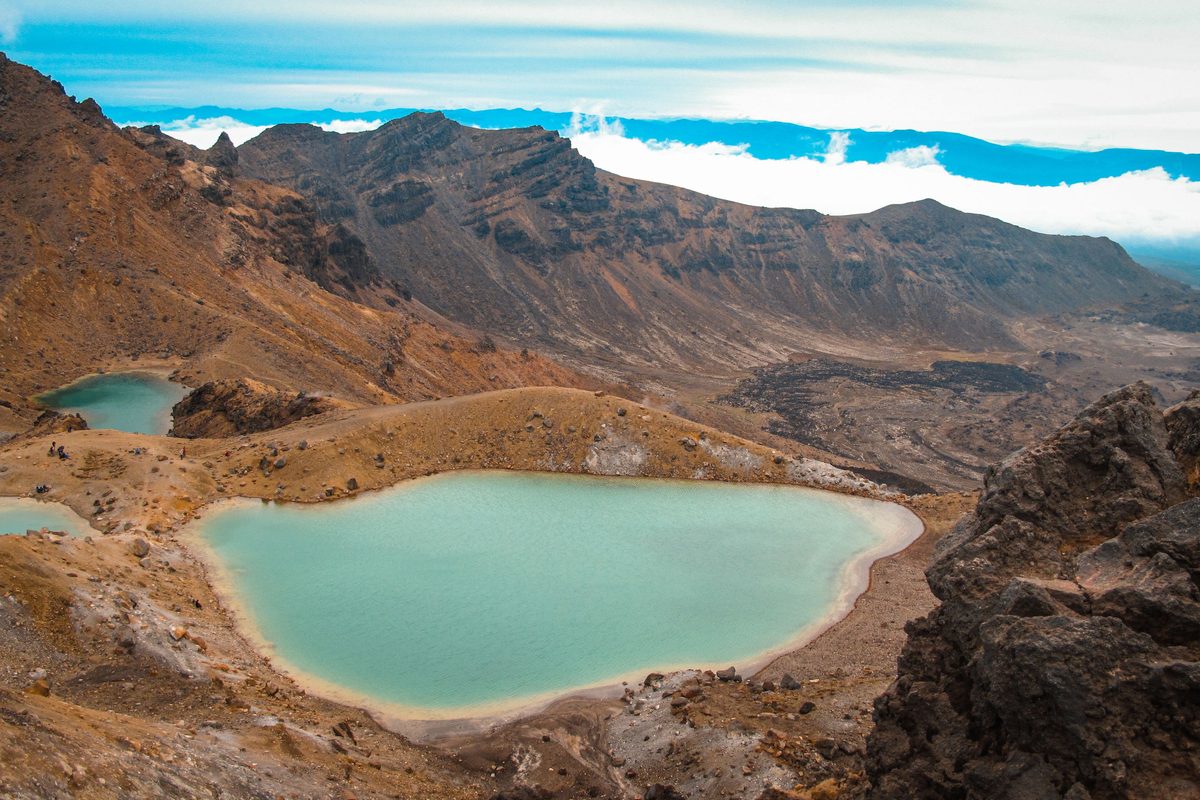
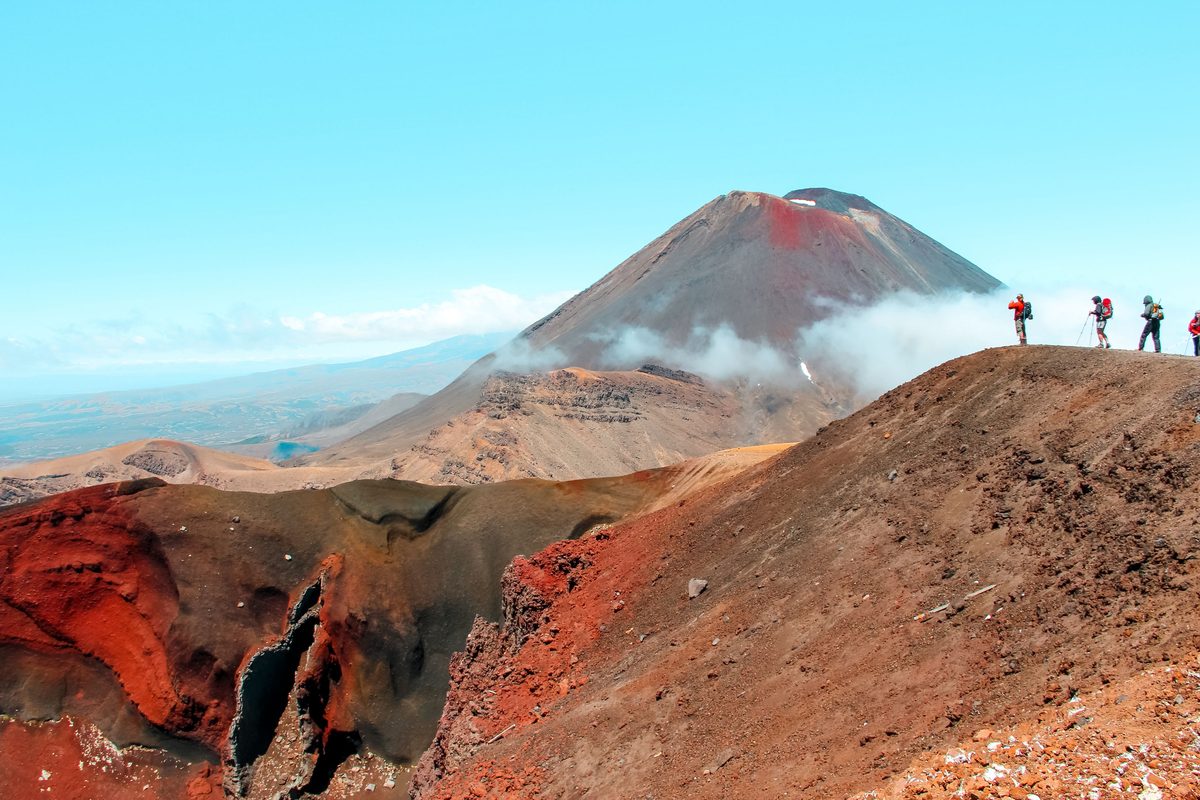
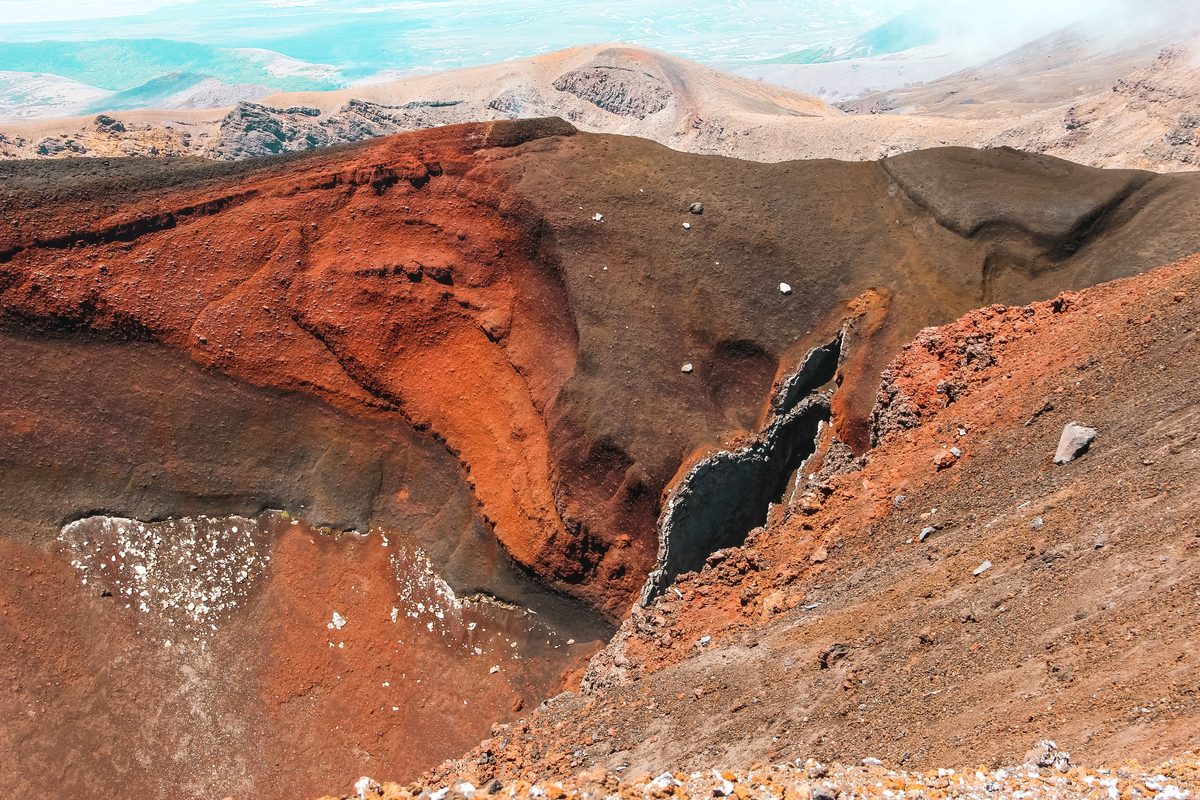
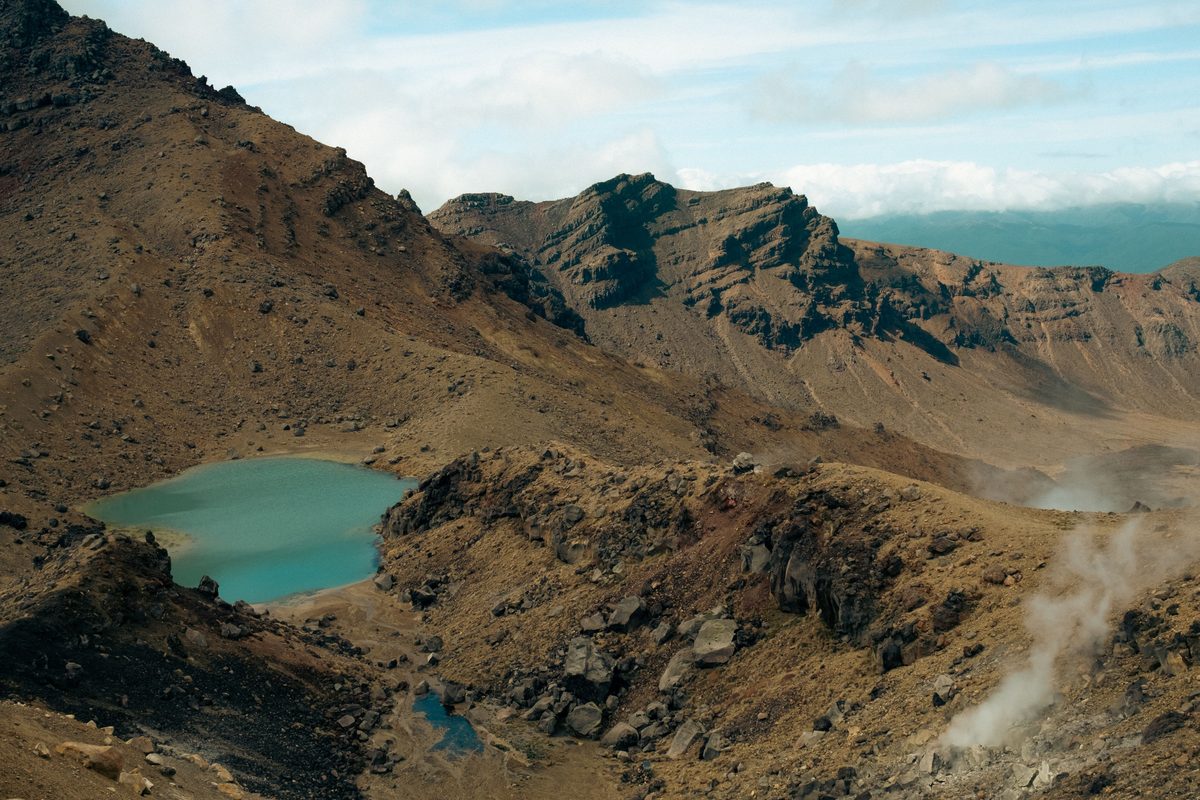
Lead-in: from Mangatepopo Carpark it’s a 25-minute, 1.7 km walk on a formed track to Mangatepopo Hut, a gentle warm-up most people use as their first night; from Mangatepopo Hut to Emerald Lakes is 3 hours 30 minutes over 8 km, climbing past Soda Springs and South Crater to the steep, loose scree of Red Crater at 1,886 m, the highest point on the track, before dropping to the vivid Emerald Lakes; from Emerald Lakes it’s 1 hour 30 minutes and 4 km down into Oturere Valley’s lava fields to Oturere Hut; from Oturere Hut to Waihohonu Hut is 3 hours over 8.1 km through beech forest and open gravel flats; and the final leg from Waihohonu Hut to Whakapapa Village is 5 hours over 15.4 km, past the Tama Lakes side trip and Taranaki Falls, back into the village.
Most walkers split this into three nights: Mangatepopo Hut, Oturere Hut, Waihohonu Hut, then a long final day out to Whakapapa Village. A common alternative for people with less time is two nights, combining the Mangatepopo to Emerald Lakes to Oturere Hut stretch into one longer first day, roughly 6 hours in total including the exposed Red Crater climb, then Oturere to Waihohonu on day two, then out to Whakapapa on day three. Either way, the honest middle section, the crossing from Mangatepopo Hut to Emerald Lakes, is the hardest and most exposed day regardless of how you split the rest, so don’t schedule it for a forecast bad-weather day if you have any flexibility at all.
The side trip to Ohinepango Springs, an hour return from Waihohonu Hut, is worth the detour if your legs have anything left: cold, startlingly clear water discharges from beneath an old lava flow at a serious rate. The historic Waihohonu Hut, a 20-minute return walk from the modern hut, was built in 1903 and is the oldest surviving hut of its kind in the park, worth a look even if you’re not a history person. Tama Lakes, accessed from partway between Waihohonu Hut and Whakapapa Village, adds 20 minutes return to the lower lake or 1 hour 30 minutes return to the upper lake, and most people skip the upper lake unless they’ve genuinely got the time and energy.
Hut and Campsite Fees
Lead-in: fees are charged per person, per night, and vary depending on when you go and whether you’re a New Zealand resident, and you need proof of eligibility to claim the New Zealand rate; during the Great Walks season, 23 October 2026 to 30 April 2027, hut fees are NZ$44 for New Zealand adults, NZ$66 for international adults, NZ$22 for New Zealand children aged 5 to 17, and NZ$33 for international children, with infants under 5 free; campsite fees over the same period are NZ$19 for New Zealand adults, NZ$28 for international adults, NZ$9 for New Zealand children and NZ$14 for international children.
Outside the Great Walks season, from 1 May to 22 October, prices drop and the New Zealand and international rates converge: huts are NZ$25 per adult and NZ$12.50 per child, campsites are NZ$10 per adult and NZ$5 per child, with the same free rate for infants. That’s a genuine saving if you’re comfortable with the increased winter risk covered further down, but you lose the resident ranger, gas cooking facilities and reliable running water that come with the Great Walks season.
For a typical three-night trip in Great Walks season as a New Zealand-resident adult, budget NZ$132 for hut tickets across three nights, or NZ$57 if you’re camping the whole way (camping is not permitted within 500 m of the huts, so you’re camping at the same designated sites, just without a bunk). International visitors should budget roughly 1.5 times those figures. This is on top of food, transport to and from the trailhead, and gear if you don’t already own tramping kit, so the hut fees themselves are rarely the biggest line item once you add it all up, see the costed itinerary further down.
Booking, Parking and Getting to the Start
Lead-in: bookings for huts and campsites on this track are required year-round, not just in Great Walks season, and are made through DOC’s online booking system; if you don’t have a valid booking, you risk a penalty fee or being turned away if the hut or campsite is full, which does happen on this track in peak summer weeks.
For the 2026/27 season the walk starts at Mangatepopo Carpark and finishes at Whakapapa Village. Parking at Mangatepopo Carpark is limited to four hours during the Great Walks season, so you cannot leave a car there for the multi-day walk. DOC’s own advice is to park at Whakapapa Village instead and take a shuttle to the start, or arrange a shuttle from a nearby town, which effectively means every Northern Circuit walker needs to book transport in advance regardless of whether they have a car. Overnight parking in Whakapapa Village itself requires a free permit, arranged through the Tongariro National Park Visitor Centre before you set off.
There’s no train station in either Whakapapa Village or at the Mangatepopo trailhead. The nearest public transport is Waimarino, also known as National Park Village, roughly 15 km from Whakapapa Village, which sits on the main trunk rail line and has bus connections. Most backpackers coming from Lake Taupo book a private shuttle directly from Taupo town rather than routing through National Park Village, which adds a transfer. If you’re already planning transport logistics for the region, our guide to getting to and around Taupo covers the wider network this connects into, and if you need somewhere to sleep in Taupo the night before an early shuttle, our where to stay in Taupo guide lists options close to the main pickup points.
How Difficult Is It, Really
DOC rates this track intermediate, advanced or expert depending on section and conditions, which is a notably harder classification than most of New Zealand’s other Great Walks carry. The terrain is open, exposed, uneven and volcanic for most of its length. The 400 m descent from the lowest Emerald Lake into Oturere Valley is specifically flagged by DOC as a hazard: steep, slippery, covered in loose sharp rock, and worst in dry conditions when it looks deceptively easy. Take this warning seriously; it’s the section where most reported injuries on this track happen.
DOC does not recommend the track for children under 10, and honestly, most 10 to 13 year olds will find the Red Crater climb and the loose descent into Oturere genuinely hard going with a pack on. If you’re travelling with younger kids and still want a taste of this landscape, the short walk from Mangatepopo Carpark to Mangatepopo Hut, 25 minutes each way on a well-formed track, is DOC’s own suggested family-friendly alternative, and our Lake Taupo with kids guide has more options that don’t involve alpine terrain at all.
Weather changes fast and without much warning up here, swinging from warm and sunny to cold, wet and windy within an hour, and wind chill on the exposed saddle sections can be severe even in summer. Check the NIWA forecast for Tongariro National Park specifically, not the general Taupo forecast, the day before you start, and be honest with yourself about turning back if the crossing day looks genuinely bad; DOC huts don’t refund fees for weather delays but a wasted booking is a much smaller loss than an accident on Red Crater in poor visibility.
Walking Outside the Great Walks Season
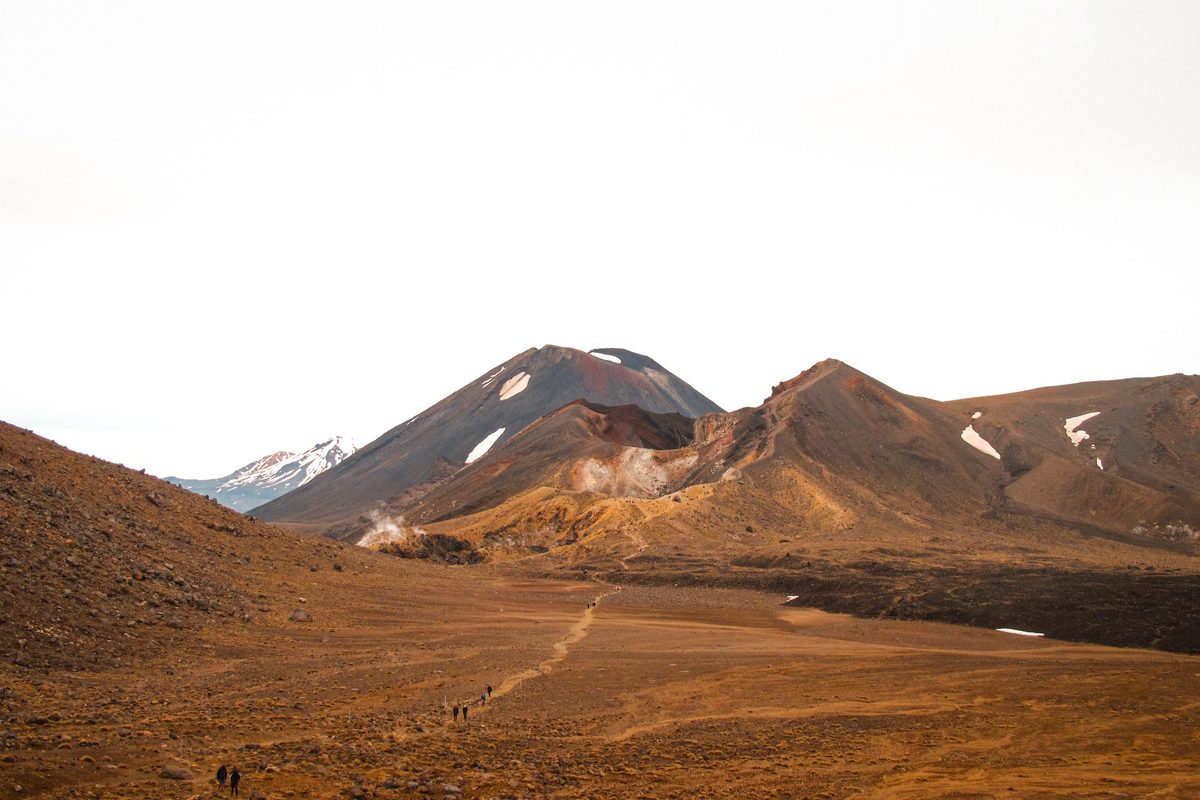
From 1 May to 22 October, the Tongariro Northern Circuit stops operating as a Great Walk and reverts to a much more serious undertaking. DOC is blunt about this: you need alpine skills, equipment and experience, and the track should only be attempted by people who can navigate if snow covers the marker poles, who understand avalanche terrain, and who have the gear to survive if conditions deteriorate. Avalanches are possible from July through October, most notably around the Red Crater crossing between South Crater and Emerald Lakes, which is exactly the section every walker has to pass through regardless of route.
Outside the Great Walks season there’s no resident hut ranger, no gas cookers provided (bring your own stove), running water may be frozen at the tank, meaning you’re melting snow or treating stream water, and there’s no emergency radio facility in the huts. You need to carry food for at least two extra days beyond what you’d normally pack, an ice axe and crampons, avalanche transceiver, probe and shovel, and ideally a personal locator beacon. This is not a budget-backpacker off-season hack to save NZ$19 a night on hut fees, it’s a genuinely different trip that requires genuinely different skills, and DOC’s fee reduction outside the Great Walks season reflects reduced facilities, not reduced risk.
What to Pack (and What You Can Skip)
Lead-in: a 40 to 60 litre backpack with a waterproof liner is the standard size for three to four days of food and gear, a three to four season sleeping bag handles the overnight temperatures in the huts, which have no heating in the bunkrooms even during Great Walks season, and you’ll want a full first aid kit with blister treatment, since blisters are the single most common reason people cut this walk short.
You cannot buy food anywhere on the track, so carry every meal and snack for the full trip plus a spare day’s worth, favouring lightweight, fast-cooking, high-energy food, and store it in a rodent-proof bag, particularly if you’re camping. Huts provide basic gas cooking facilities during the Great Walks season but not cooking utensils, so you still need your own pot, plate, cup and cutlery. A one to two litre water bottle covers most days; treat stream water if you’re topping up outside the huts.
Clothing-wise, pack at least one full set to walk in and a completely separate dry set to sleep in, since hut bunkrooms get cold overnight and wet walking clothes won’t dry properly indoors. Wool or polypropylene base layers, a fleece or wool mid-layer, a genuinely waterproof and windproof raincoat, wind and waterproof over-trousers, and a warm hat and gloves are non-negotiable even in the middle of summer, because the exposed saddle sections see wind chill regardless of season. Broken-in tramping boots matter more here than on most Taupo day walks, given the loose volcanic scree.
What you can reasonably skip: a full change of “town” clothes for the huts (nobody cares what you look like at Oturere Hut), excessive camera gear if you already carry a phone with a decent camera, and heavy cooking setups if you’re going stoveless with cold-soak meals, which a fair number of budget trampers do successfully on a three-day trip to save weight. If you need a fuller kit list before you commit to buying anything, our general Taupo backpacking packing list covers the base layer you’d want regardless of which walk you do.
A Costed 3-Day, 2-Night Itinerary
Lead-in: here’s a realistic New Zealand-resident budget for three days and two nights during Great Walks season, starting and finishing with transport from Taupo: return shuttle from Taupo to Mangatepopo Carpark and back from Whakapapa Village runs roughly NZ$70 to 90 depending on operator and whether it’s a shared or private service; two hut nights at NZ$44 each comes to NZ$88, or NZ$38 if you camp both nights instead; food for three days for one person, buying supermarket supplies in Taupo before you go rather than at an outdoor store, runs about NZ$45 to 60; and if you don’t own tramping gear, a full multi-day hire package, pack, sleeping bag, mat and stove, from a Taupo or National Park Village outfitter typically costs NZ$60 to 90 for the trip.
All in, a self-sufficient New Zealand-resident backpacker who already owns gear is looking at roughly NZ$200 to 240 for the full three-day trip including transport and food, huts included. Add gear hire and that climbs to around NZ$260 to 330. International visitors should add the higher international hut rate, which pushes the hut component from NZ$88 to NZ$132 for two nights. None of this includes accommodation in Taupo itself before or after the walk, which is worth factoring in if you’re not going straight from a hostel bed to the trailhead; our daily budget breakdown for backpacking Lake Taupo has the wider cost picture for the rest of your trip. If you’re working this hike into a longer stay, our 5-day Lake Taupo itinerary shows how a three-day tramp slots in alongside time back in town.
Who This Hike Suits (and Who It Doesn’t)
Fit backpackers with at least some multi-day tramping experience are the obvious fit, particularly anyone who’s already done the Tongariro Alpine Crossing as a day walk and wants more of the same landscape without the day-trip crowds; you’ll have Oturere and Waihohonu almost entirely to yourselves outside the Red Crater section, since day walkers turn back or exit at Ketetahi. Solo travellers do this track regularly and safely, provided you register your intentions with someone and stick to your booked schedule so DOC knows roughly where you should be; see our solo travel guide for Lake Taupo for the wider safety context.
Couples looking for a shared adventure without technical climbing get a genuinely good multi-day trip here, and the huts’ shared bunkrooms are a reasonable trade-off for a landscape you can’t drive to. Families with teenagers who already hike comfortably can manage it, but families with younger children are better served by the short Mangatepopo Hut walk or the flatter, shorter lakefront and geothermal walks around Taupo town itself, which don’t carry any alpine risk. If fishing rather than tramping is what actually pulled you to this region, our Lake Taupo fishing guide is a better use of your time than forcing a multi-day hike you’re not excited about.
This hike doesn’t suit anyone hoping for a relaxed nature stroll, anyone with a genuine fear of heights or exposed ridgelines, or anyone unwilling to carry three days of food and gear on their back over uneven ground. If that’s you, the Tongariro Alpine Crossing gives you the single best day of this landscape, Red Crater and Emerald Lakes included, without the huts, the pack weight or the multi-day commitment, and it’s a far better starting point if you’re not sure multi-day tramping is for you yet.
Best Time of Year to Go
Late December through February is peak season, warmest weather, longest daylight and the most crowded huts, particularly around New Year and the school summer holidays when Kiwi families book huts out months ahead. Shoulder months, November and March, generally offer a good balance: the Great Walks season facilities are running, huts are less booked out, and weather is still reasonably settled, though never guaranteed. Our best time to visit Taupo guide covers how this fits into the wider annual pattern for the region, and our dedicated Taupo weather guide has the month-by-month rainfall figures worth checking before you lock in dates.
April, right at the tail of the Great Walks season, can deliver spectacular clear, cold days with far fewer people than summer, but daylight hours shrink fast and an early cold snap is a real possibility this late in the season. If you’re set on the shoulder season, book flexible transport and keep an eye on the forecast rather than locking in a fixed date months out.
What’s Overrated and What to Skip
The full four-day itinerary is overrated for most reasonably fit backpackers now that the route is 35.5 km rather than 44.9 km; three days is genuinely enough for most people and saves a hut fee. Climbing to the summit of Ngauruhoe or Tongariro, sometimes suggested by other trampers you meet on the track, is not something DOC or Ngati Tuwharetoa endorse, it’s steep unstable scree with a real injury rate, and it adds hours to an already long day for a view that’s arguably better from the marked track anyway.
The upper Tama Lake side trip is worth skipping on your final push day if you’re tired, the return trip alone eats 90 minutes you’ll want for the long walk to Whakapapa Village; the lower lake, a 20-minute return detour, gives most of the visual payoff for a fraction of the time and effort. If someone tells you the track is an easy weekend stroll comparable to a lakefront walk back in Taupo town, they’re describing a different track; don’t underestimate the Red Crater and Oturere descent based on secondhand accounts written before the fire closure changed the route. And if hut bookings are full or your dates don’t line up, don’t force it, there’s a long list of other adventure activities around Taupo and day trips from Taupo that fill a spare day just as well.
Frequently Asked Questions
Is the Tongariro Northern Circuit still a loop in 2026?
Not currently. The section between Whakapapa Village and Mangatepopo Hut is closed following the 2025 Tongariro fire, so the 2026/27 Great Walk runs one way from Mangatepopo Carpark to Whakapapa Village over 35.5 km, down from the traditional 44.9 km loop. You’ll need transport back to your original starting point unless you park at Whakapapa Village and shuttle to the start.
How much does it cost to do the Tongariro Northern Circuit?
During the Great Walks season, 23 October 2026 to 30 April 2027, huts cost NZ$44 per adult per night for New Zealand residents and NZ$66 for international visitors, with campsites at NZ$19 and NZ$28 respectively. A typical three-day, two-night trip costs a self-sufficient New Zealand-resident backpacker roughly NZ$200 to 240 including shuttle transport and food, more if you’re hiring gear or paying international hut rates.
Do I need to book huts on the Tongariro Northern Circuit?
Yes, year-round, not just during the Great Walks season. Bookings are made through DOC’s online booking system, and walking without a valid booking risks a penalty fee or being turned away if the hut or campsite is full, which happens regularly during peak summer weeks.
How many days do you need for the Tongariro Northern Circuit?
Most people take three days and two nights, or four days and three nights at a more relaxed pace, using the Mangatepopo, Oturere and Waihohonu huts. Very fit trampers can complete the current 35.5 km route in two long days, but three days is a more comfortable pace given the exposed and technical sections.
Is the Tongariro Northern Circuit harder than the Tongariro Alpine Crossing?
Yes, in cumulative terms. The Northern Circuit includes the entire Alpine Crossing section, Red Crater and Emerald Lakes included, plus two additional days over uneven volcanic terrain carrying a full overnight pack, rather than a day pack. DOC rates the circuit intermediate to expert depending on section, a notch above most other New Zealand Great Walks.
Can beginners do the Tongariro Northern Circuit?
It’s possible with reasonable fitness and good weather, but it’s not the best first multi-day tramp for someone with zero hiking background. DOC doesn’t recommend it for children under 10, and the exposed, loose-rock descent from Emerald Lakes into Oturere Valley catches out plenty of otherwise capable walkers. If you’re unsure, do the one-day Tongariro Alpine Crossing first to test your fitness and comfort with the terrain before committing to hut bookings.
Final Thoughts
The Tongariro Northern Circuit is still one of the best multi-day walks accessible from a Lake Taupo base, but the version you’ll actually walk in 2026/27 is shorter and structured differently than most existing write-ups describe, thanks to the fire closure and the Oturere Hut rebuild. Book your huts as soon as you’ve settled on dates, check the DOC alerts page again close to your trip since both the closure and the works are ongoing, and treat the Red Crater to Oturere descent with real respect regardless of how experienced you are. Once you’re back in town, refuel properly, our Taupo food and dining guide has recommendations that will feel very well earned after three days of dehydrated meals, and if the volcanic landscape has you curious about geothermal features closer to town, our Taupo geothermal attractions guide covers accessible sites that need none of the alpine preparation.
If three days of exposed alpine terrain and hut bookings sounds like more commitment than you want right now, there’s no shame in doing the Alpine Crossing as a day trip first, or building your Taupo itinerary around the shorter walks covered elsewhere on this site, then coming back for the full circuit once you know the landscape.
Back to the main guide: see our full Lake Taupo hiking and walks guide for every other trail in the region, from short lakefront strolls to the region’s other multi-day options.