If you’re backpacking Lake Taupo, you’ve picked one of the smartest stops on the North Island. In one compact town you get world-class hiking within an hour’s drive, free natural hot springs to sink into after a big day, the cheapest skydive in the country, legendary trout fishing, and dorm beds that still cost less than a sit-down dinner. I came for two nights the first time and left after five, and I’ve watched that happen to just about everyone I’ve met here.
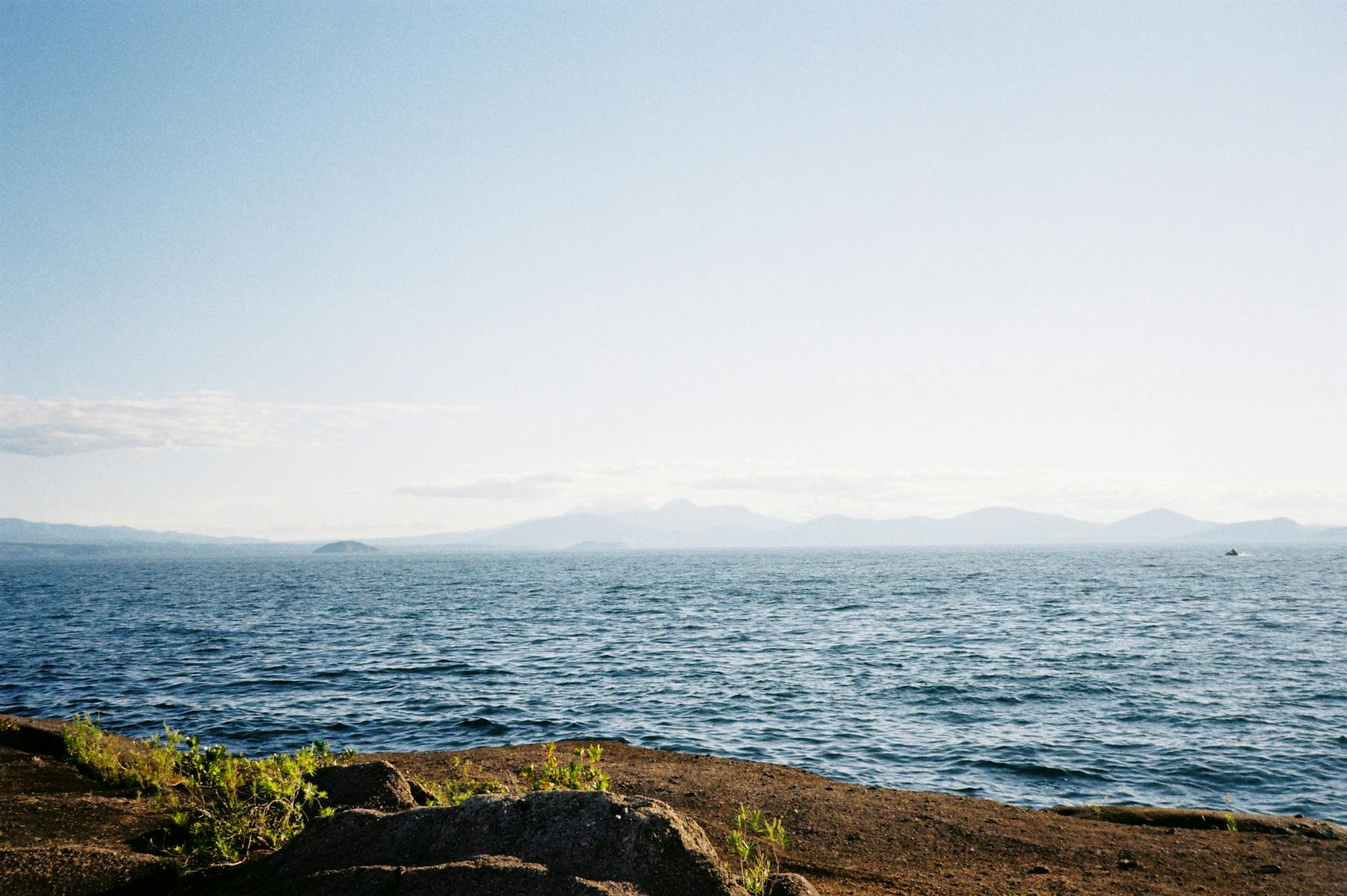
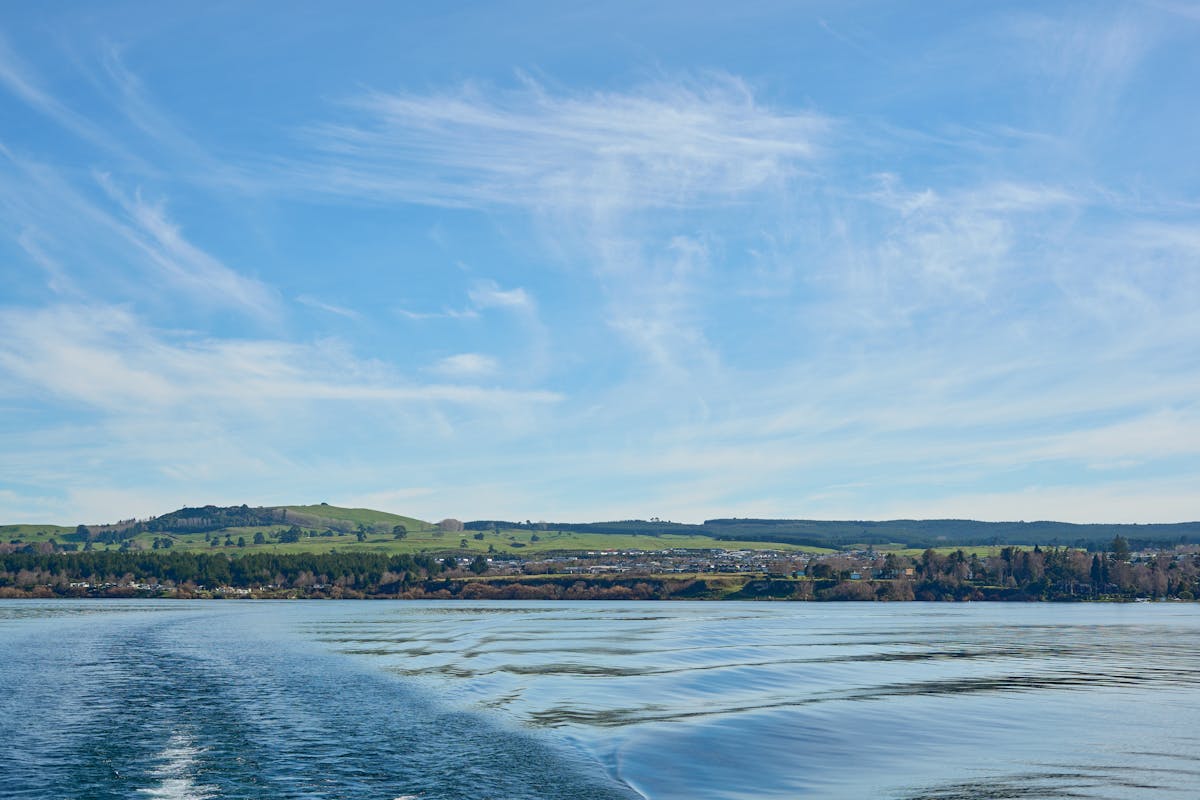
The lake itself is genuinely staggering — the largest in New Zealand, roughly the size of Singapore, filling the caldera of a supervolcano that last blew in 232 CE with enough force to redden skies as far away as Rome and China. But you don’t turn up for the geology lecture. You turn up because Taupo hands you an almost unfair concentration of the stuff budget travellers actually want, and it does it at a price point most of the country can’t touch.
This is the hub guide. I’ll walk you through realistic daily budgets, when to come, where to sleep, what to pack, and how to fill your days without gutting your wallet — then point you to the deeper guides when you want the fine detail. If you’d rather jump straight to a route, the 3-day itinerary and the step-by-step trip planner are the fastest way in.
Where exactly is Lake Taupo, and why does it matter?
Taupo town sits on the northeastern shore of the lake, about 280 kilometres south of Auckland and 370 kilometres north of Wellington. That puts it almost dead centre on any North Island road trip, which is why nearly every backpacker bus route stops here. The town is the service hub for the wider Taupo District, which runs south past Turangi and butts up against Tongariro National Park — home to the famous Tongariro Alpine Crossing and the region’s other great walks.
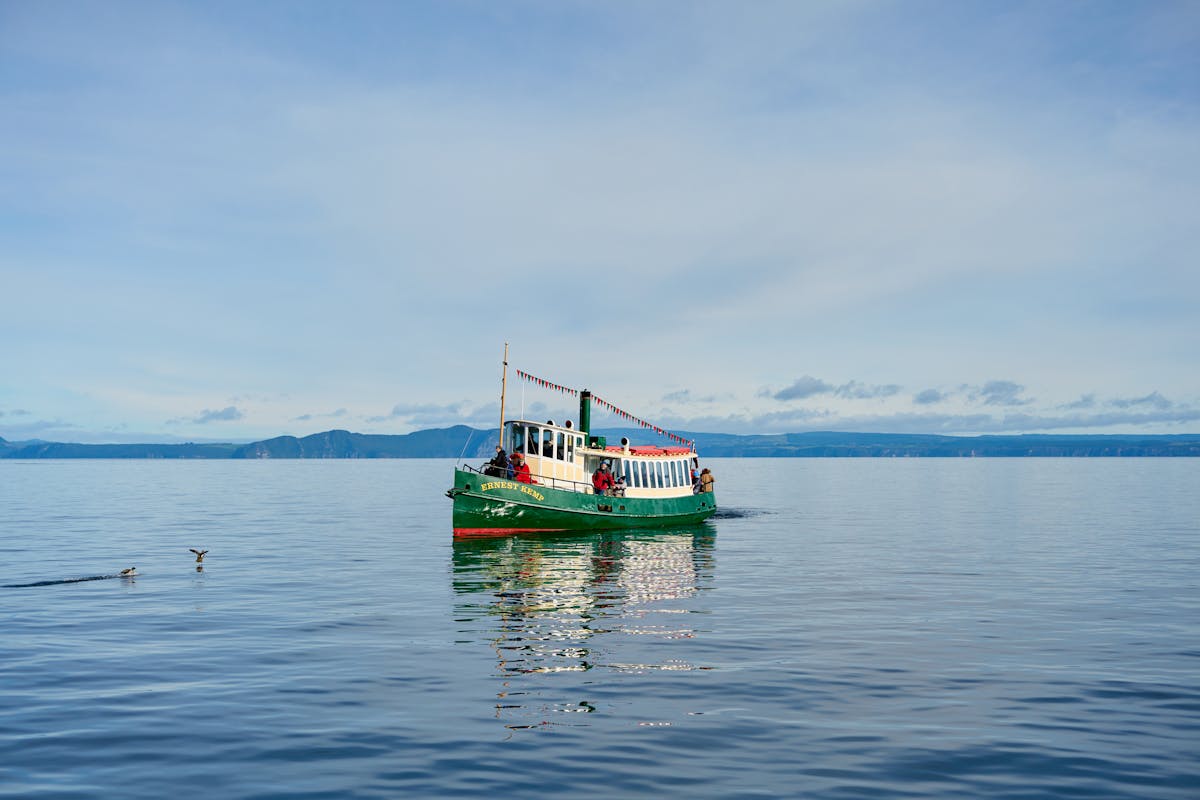
The lake dominates everything. Formed by volcanic eruptions over tens of thousands of years, it covers 616 square kilometres and drops to more than 160 metres deep in places. The Waikato River, New Zealand’s longest, spills out of the northeastern corner and thunders over Huka Falls a few kilometres downstream.
For you, that geography means one word: variety. Within 90 minutes of your bunk you can cross an active volcanic saddle, soak in geothermal streams, kayak out to the Maori rock carvings, mountain bike accredited trails through native bush, throw yourself off a bungy platform, or just flop on a lakeside beach and watch the snow-capped volcanoes catch the afternoon light. Few places in the country pack this much in, and almost none do it this cheaply.
Best time to visit Lake Taupo for backpackers
Taupo has a temperate inland climate, but it sits around 365 metres above sea level, so it runs cooler than coastal towns at the same latitude. Knowing the seasons helps you pack right and time your activities. For the full month-by-month picture, the Lake Taupo weather guide breaks down temperatures and rainfall in detail, and the best time to visit for backpackers guide weighs crowds against cost.
Summer (December to February)
Peak season. Daytime temperatures sit between 20°C and 25°C, sometimes higher, and the lake is warm enough to swim by mid-January. The days stretch out — sunset lands after 8:30pm — so you get maximum daylight for hiking, biking, and messing about on the water. The trade-off is real: hostels fill fast, prices creep up, and the Tongariro Crossing can feel like peak-hour foot traffic. Book beds and shuttles at least a week ahead between Christmas and early February.
Autumn (March to May)
This is my pick, and most seasoned backpackers I know agree. The summer crush thins out, hostel prices soften, and the weather holds mild through March and into April — highs of 15°C to 20°C on stable, calm days. The bush turns gold, the trout fishing season hits its stride as fish start running the rivers, and the Crossing is far less crowded. By late May the mornings bite and frost is possible, but proper layers sort that out.
Winter (June to August)
Cold, but not brutal. Expect daytime highs of 8°C to 12°C and the odd overnight dip below zero. Snow settles on the Tongariro volcanoes but rarely in town. This is the quietest tourism window, which means the lowest bed prices and elbow room at every attraction. It’s also prime fly-fishing season on the Tongariro River. The catch: short daylight, a Crossing that sometimes closes for weather, and some operators running reduced schedules. If you don’t mind layering up, winter is a bargain.
Spring (September to November)
Warming temperatures (12°C to 18°C), flowering kowhai, and longer days. It’s transitional, so you’ll get sun and rain in the same afternoon. The Crossing reopens reliably by late October and operators ramp back up. Beds are easy to find and prices are moderate — a good time to hike before the summer rush lands.
The verdict
For the best mix of weather, price, and space, aim for March to April or October to November. Want guaranteed warmth and don’t mind paying for it? December to February. Genuinely broke and cold-tolerant? Winter will surprise you. Whatever you choose, cross-check conditions on MetService before you commit to any alpine day.
How much does backpacking Lake Taupo cost? A realistic daily budget
The question everyone asks: what’s this actually going to cost me? Taupo is one of the cheaper stops on a New Zealand trip, but the adventure activities can torch a budget in an afternoon if you’re not disciplined. Here’s a realistic daily breakdown in NZD, current as of 2026. For the full line-by-line version, see the Lake Taupo backpacker budget breakdown.
Budget backpacker: NZD $80–$120 per day
The bare-bones-but-comfortable tier — hostel dorms, cooking your own meals, days built around free stuff.
Accommodation: NZD $25–$35 a night for a dorm bed. Taupo’s hostels are competitively priced; Haka House dorms start around NZD $28 and Finlay Jack’s from NZD $25. Freedom camping is free if you’ve got a certified self-contained vehicle. The full where to stay on a budget guide compares every option.
Food: NZD $15–$25 a day if you shop at Countdown or PAK’nSAVE and cook in the hostel kitchen. A week’s groceries runs NZD $120–$175. Leave room for the occasional bakery pie (NZD $5–$7) or takeaway (NZD $12–$18).
Transport: NZD $0–$10 a day once you’re in Taupo. The centre is walkable, the Taupo Connector local bus is NZD $2 a ride, and bike hire starts around NZD $20 a day.
Activities: NZD $0–$30 a day. A huge share of the best experiences here are free — Huka Falls, the lakefront walkway, the Spa Thermal Park hot springs, the Aratiatia Rapids releases — and Craters of the Moon is just NZD $8. Spread your paid activities out to keep the daily average honest.
Mid-range backpacker: NZD $130–$200 per day
Still in dorms, or occasionally splashing on a private room, eating out once a day, and doing one or two paid activities.
Accommodation: NZD $30–$55 a night for a private hostel room or budget motel. Food: NZD $30–$45 a day — cook breakfast and lunch, eat dinner out. Activities: NZD $50–$100 on activity days, which covers a Huka Falls jet boat (around NZD $115), a Crossing shuttle (NZD $50–$60 return), or a cruise to the rock carvings (from NZD $49). The things to do in Lake Taupo guide has the full activity lineup with prices.
Adventure splurger: NZD $250+ per day
The go-big tier. This is skydiving at 15,000 feet (NZD $379+), bungy (NZD $199), white-water rafting (NZD $129), or a scenic chopper flight (NZD $250+). These are one-off spikes — most people pick one or two, then keep the surrounding days lean. The adventure activities guide lays out what each one’s actually like.
Money-saving tips for Taupo
Book adventures online ahead of time — operators routinely knock 10–15% off web-only rates. Look for combo deals that bundle activities (bungy plus jet boat, say) at a discount. Fill your bottle from the tap; New Zealand water is safe and excellent. Hit the Saturday market at Riverside Park (9am–1pm) for produce cheaper than the supermarket. Lean on the mountain of free things to do — Taupo has more no-cost options than almost anywhere on the circuit. And ask at the i-SITE about current deals and standby discounts; the staff genuinely know.
Where to stay in Taupo on a backpacker budget
Taupo punches above its weight for cheap beds. There’s a solid lineup of hostels, plus camping and freedom camping that push costs down further. For full reviews and comparisons, see the complete where to stay in Taupo on a budget guide.
Hostels
Taupo has around half a dozen dedicated backpacker hostels, all within walking distance of the lake and town centre. Haka House Taupo is the standout for most people — clean, modern, well-located, with a sociable common area and staff who actually help. Dorms from about NZD $28, privates from around NZD $75. Finlay Jack’s Backpackers (YHA Taupo) is the reliable pick, popular with solo travellers and families alike, and consistently clean; dorms from NZD $25, privates from NZD $65, with a discount for YHA members. Base Taupo skews younger and louder, with an on-site bar and events for the party crowd. Urban Retreat Backpackers and Tiki Lodge are smaller and cosier if you want something more intimate.
Camping and holiday parks
Travelling by campervan or tent? Holiday parks start around NZD $18–$25 per person per night at places like Taupo DeBretts (which throws in hot-pool access) and Lake Taupo Holiday Resort. DOC campsites in the surrounding area go cheaper still — sometimes NZD $8–$15 a night for basic facilities. If you’re planning to be self-sufficient, read up on the local rules in the safety tips for backpackers guide before you head out.
Freedom camping
Freedom camping is legal in some spots around Taupo, but only with a certified self-contained vehicle. The rules have tightened, and fines for camping outside designated areas are steep (NZD $200+). Always check the CamperMate app or the Taupo District Council site for current locations before you park up for the night.
Getting to Lake Taupo
Taupo is well connected by road and bus, though it has no commercial flight service. For every transport option in detail, see the getting to Taupo transport guide.
From Auckland (280 km, ~3.5 hours drive)
Bus: InterCity runs daily. The trip takes roughly 4.5–5 hours and costs from NZD $25–$55 depending on how early you book. A FlexiPass is worth a look if you’re doing multiple legs (20 hours for NZD $225). Driving: State Highway 1 south through Hamilton and Tokoroa, or the prettier SH5 route via Rotorua; around 3.5–4 hours either way. Shuttle: Private transfers from Auckland Airport typically run NZD $80–$120 per person.
From Rotorua (80 km, ~1 hour drive)
Bus: InterCity buses run daily, about 1 hour 15 minutes, roughly NZD $20–$40. Driving: A straightforward 80 km run south on SH5 through bush and farmland, about an hour.
From Wellington (370 km, ~4.5 hours drive)
Bus: InterCity takes roughly 5.5–7 hours at NZD $35–$60. Driving: North on SH1, around 4.5 hours with stops. Backpacker buses: If you’re on a hop-on, hop-off service like Stray or Kiwi Experience, Taupo is a standard North Island stop.
Getting around Taupo
Taupo town is compact and walkable — you can cover the main strip from the i-SITE to the lake in about ten minutes on foot. For the attractions further out, here are your options.
Walking and cycling: The lakefront Great Lake Walkway runs 10 flat, paved kilometres along the shore. Several hostels rent bikes, and dedicated shops charge NZD $20–$40 a day. Taupo Connector bus: Three local routes meet at the i-SITE, fares NZD $2 a trip. Shuttle services: For the Tongariro Crossing and other out-of-town spots, shuttles run daily; the Crossing shuttle is NZD $50–$60 return — book a day ahead in summer. Car rental: For maximum flexibility, compacts start around NZD $40–$60 a day. If you’re weighing it up, the solo backpacking guide has notes on getting around alone without one.
Top things to do in Taupo on a backpacker budget
Taupo’s real strength is the sheer range of experiences, a surprising number of them free. For the complete rundown, see the things to do in Lake Taupo guide.
Free and low-cost activities
Soak in the free hot springs at Spa Thermal Park: Follow the Otumuheke Stream from Spa Thermal Park to where geothermally heated water meets the cool river, find your temperature sweet spot, and soak for nothing, surrounded by bush. It’s about a 25-minute walk from town. Bring a towel and go late afternoon, when the light through the steam is at its best.
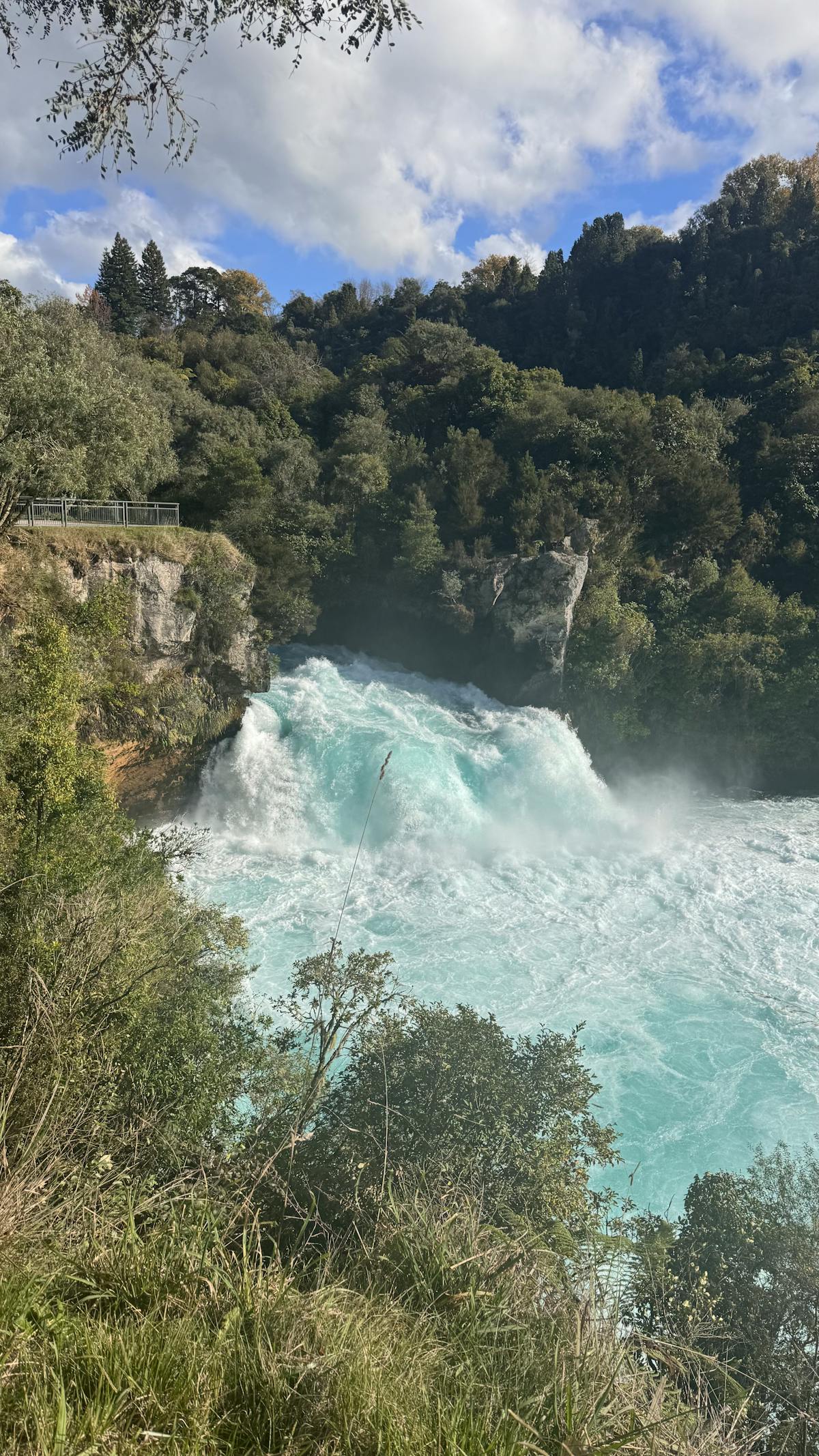
Walk to Huka Falls: New Zealand’s most visited natural attraction, and free. The falls sit 5 km north of town, reachable by a pleasant trail from Spa Thermal Park (about an hour) or a short drive. Watch 220,000 litres a second force through a narrow gorge into a startling turquoise pool.
Watch the Aratiatia Rapids: A dam upstream releases water several times daily (usually 10am, noon, and 2pm, plus 4pm in summer). The canyon floods dramatically within minutes — free, and genuinely worth timing your walk around.
Walk the Great Lake Walkway: Ten flat, paved kilometres along the shoreline from the yacht club to Five Mile Bay, gorgeous at sunset. Hike Mount Tauhara: A steady 2–3 hour return climb with panoramic views over the lake and the Tongariro volcanoes. Craters of the Moon: A geothermal walkway of bubbling craters and steam vents for NZD $8 — one of the best-value geothermal experiences in the country.
Adventure activities worth the splurge

Skydiving: Taupo is the cheapest place to skydive in the country, and plenty of backpackers come specifically for it. Jump from 12,000 or 15,000 feet with the views stretching to both coasts on a clear day. Prices start around NZD $299 for 12,000 feet and NZD $379 for 15,000. Book online for the best rate.
Bungy jumping: The Taupo Bungy, run by AJ Hackett, is the highest water-touch bungy in New Zealand — a 47-metre drop above the Waikato River at NZD $199. Huka Falls jet boat: Blast up the Waikato at 80 km/h to the base of the falls, the only jet permitted to go there, for around NZD $115.
White-water rafting: The Tongariro River serves up more than 60 Grade 3 rapids through pristine forest and volcanic country. A half-day runs around NZD $129. Keep an eye out for the whio, New Zealand’s rare blue duck.
Kayaking to the Maori rock carvings: Paddle across to the enormous carvings at Mine Bay, reachable only from the water. Guided tours run around NZD $80–$130; a sailing or cruise trip starts from NZD $49.
Hiking near Lake Taupo
The region is a hiker’s dream, with trails running from gentle lakeside strolls to one of the world’s most famous alpine crossings. For the full trail guide, see the hiking and walks around Lake Taupo pillar.
Tongariro Alpine Crossing
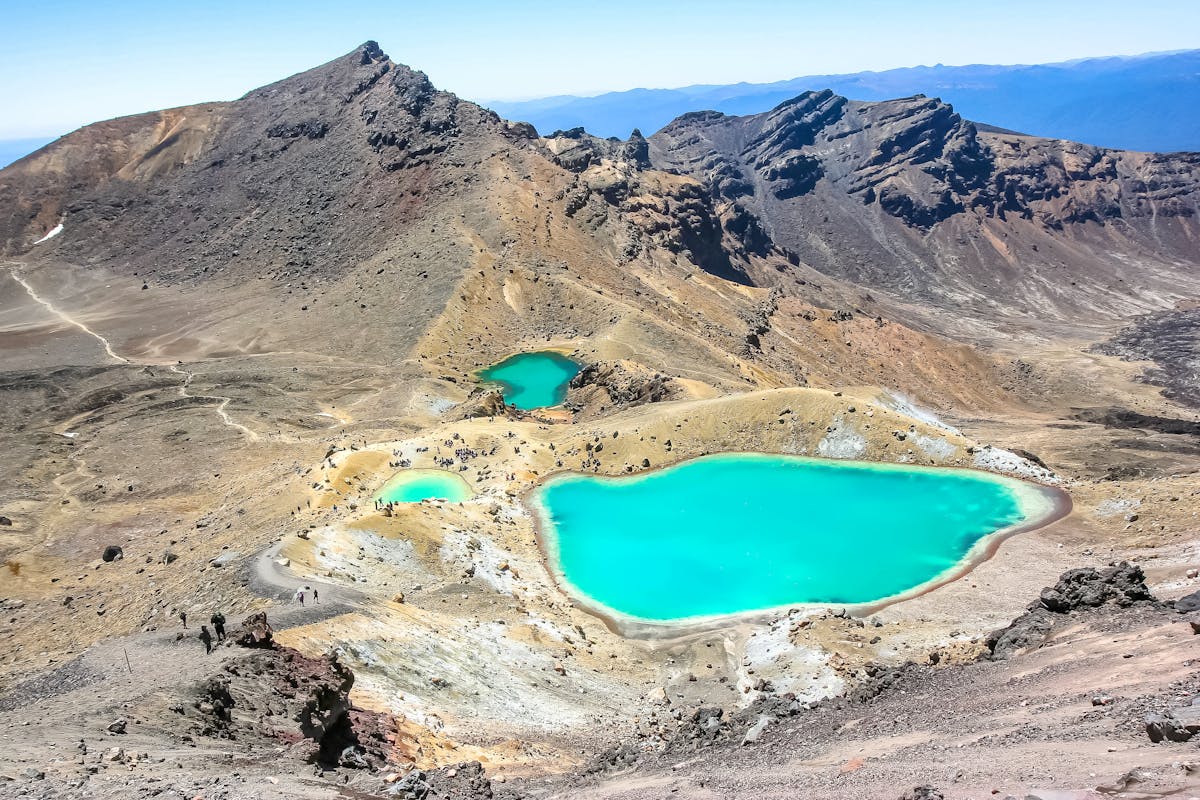
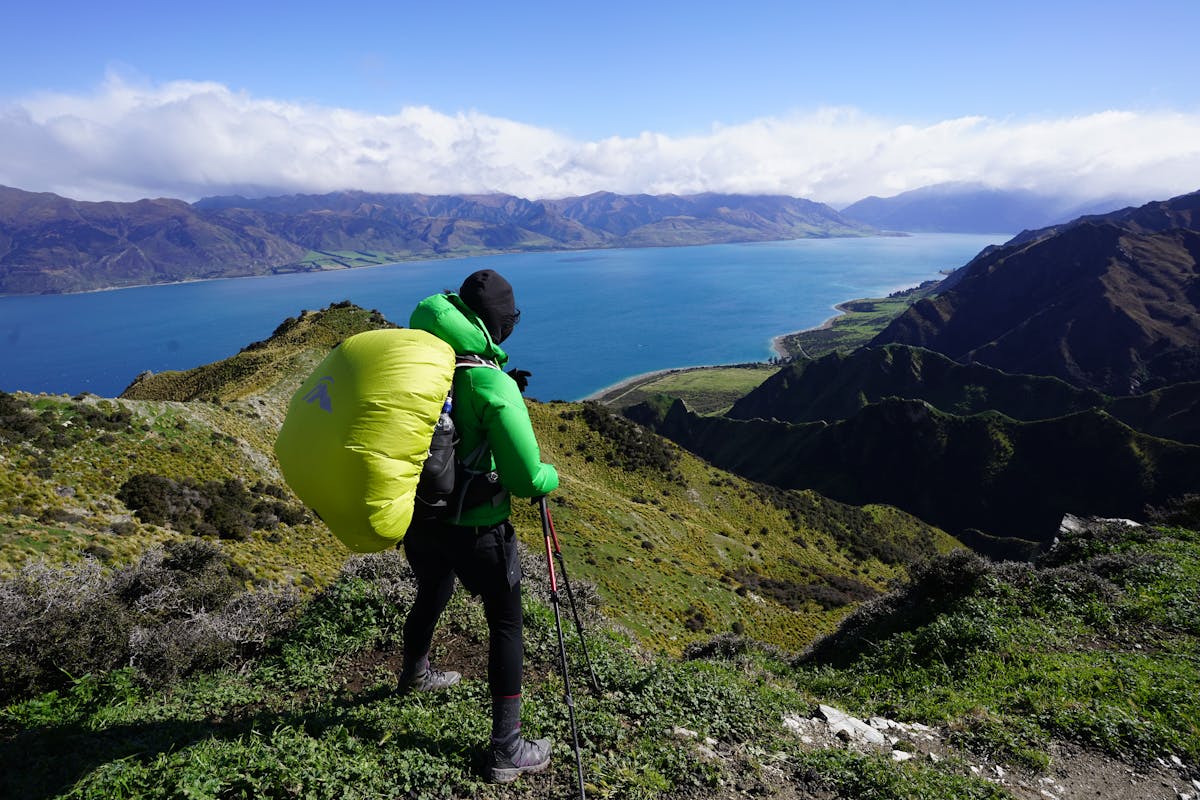
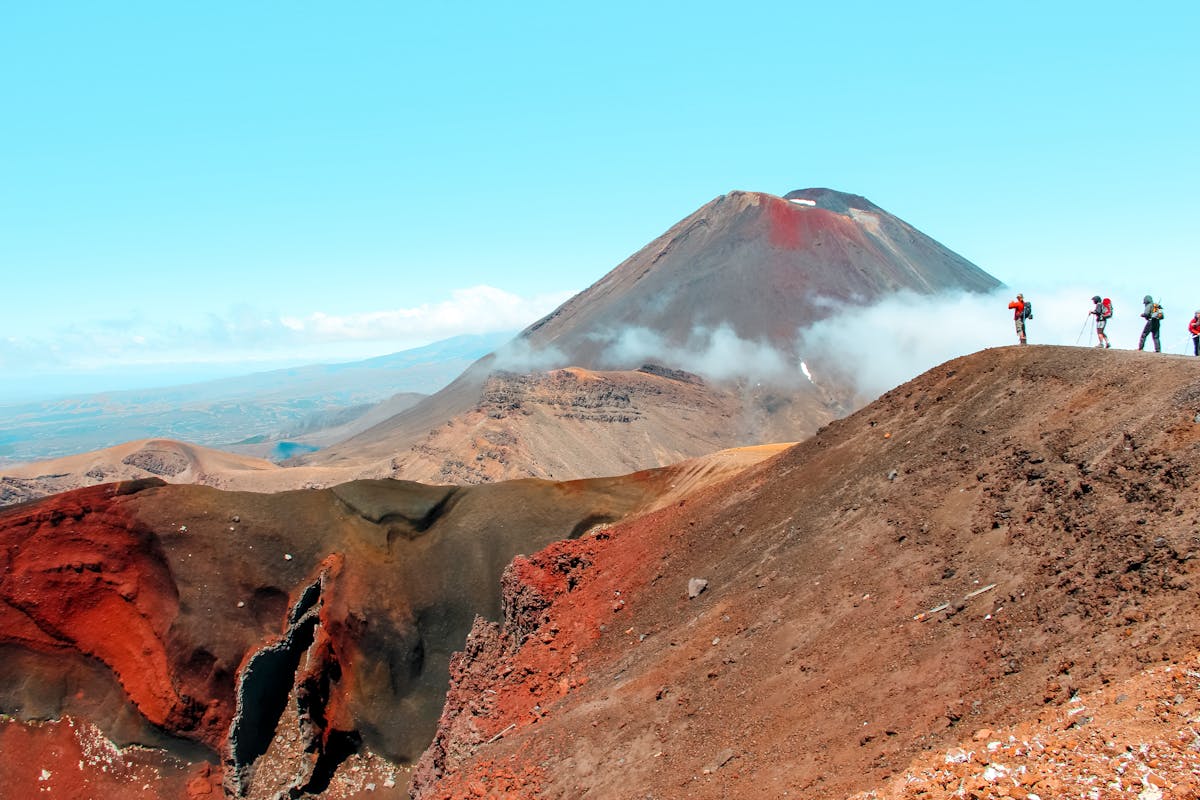
This 19.4 km one-way hike across active volcanic terrain gets called New Zealand’s best day walk more often than any other trail. You’ll climb close to 800 metres to 1,900 metres above sea level, past ancient lava flows, the dramatic Red Crater, the turquoise Emerald Lakes, and views right across the Central Plateau. Reckon on 6–8 hours and a moderate-to-good level of fitness.
A shuttle from Taupo is essential — the trail is point-to-point, not a loop — and costs NZD $50–$60 return, with departures as early as 5:45am. Book ahead in summer, note that the track can close in bad weather, and check the official Department of Conservation Tongariro Alpine Crossing page for current booking rules before you go.
Great Lake Trail
One of New Zealand’s 22 Great Rides, this 71 km mountain biking and walking trail wraps the forested western shores. It runs through native bush, past waterfalls, over deep gorges, and along volcanic cliffs, broken into three sections you can tackle over two to three days or sample in shorter chunks. Rated Grade 3 (intermediate). Base yourself in Kinloch for the easiest access.
Short walks
For easier days, the Huka Falls walk (2.7 km, about an hour), the Mount Tauhara summit track (2–3 hours return), and the Craters of the Moon loop (45 minutes) all deliver serious scenery without a full day out. The Waikato River trails along the riverbank are flat, shaded, and fine for any fitness level. The hiking pillar covers each one with distances and difficulty.
Fishing at Lake Taupo
Lake Taupo is one of the world’s premier trout fisheries, and you don’t need to be an experienced angler to get in on it. The lake and its tributary rivers hold both rainbow and brown trout, some over 5 kg. For the complete guide, see the fishing Lake Taupo pillar.
The essentials: you need a specific Taupo Fishing District licence (different from the standard NZ one), managed by the Department of Conservation. A 24-hour licence is about NZD $20 and perfect for a quick session. The lake is open year-round, though river-mouth and tributary fishing peaks April to October during the spawning runs. Fishing hours are 5am to midnight, the daily bag limit is six trout, and the minimum size is 35 cm.
Budget tip: Shore fishing with basic spin gear from spots like the Waitahanui Rip or the river mouths is free beyond the licence, and it can be startlingly productive. No guide, no boat required.
Geothermal attractions
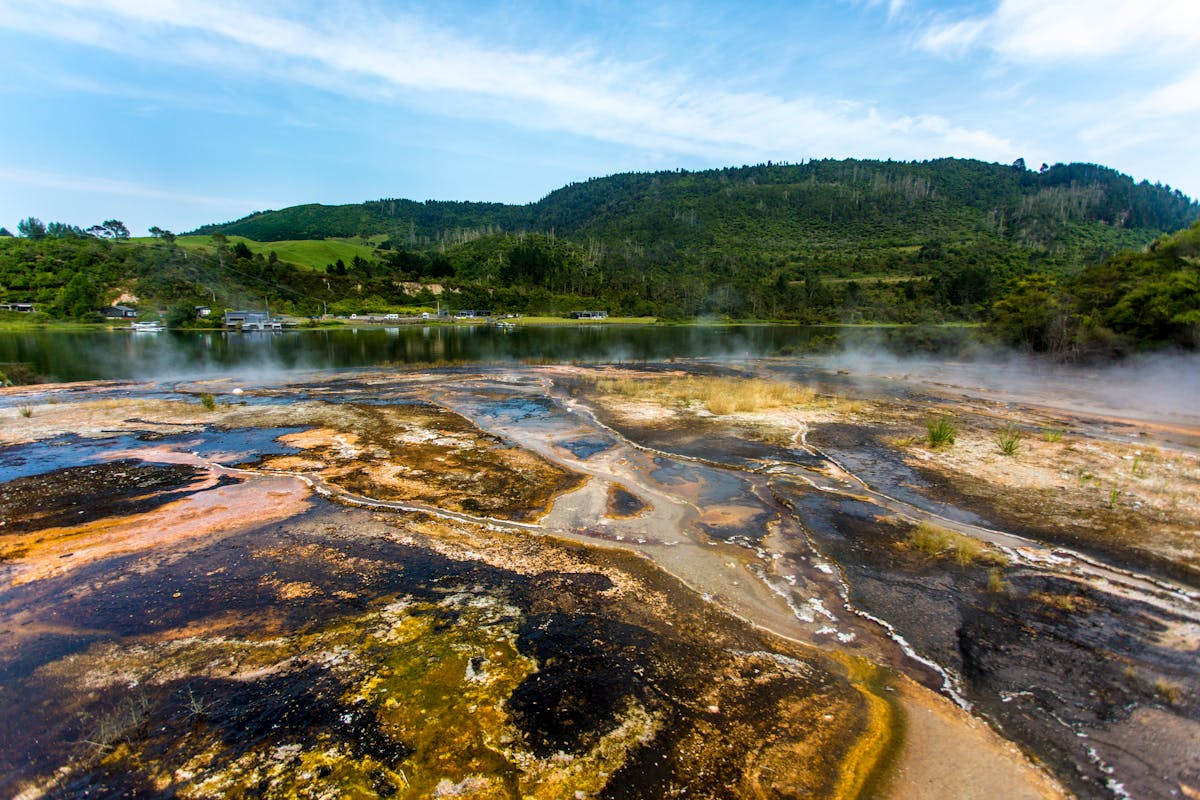
Taupo sits on one of the most active geothermal zones on the planet, and the evidence is everywhere — steam curling off roadside drains, hot streams threading through parks, whole landscapes remade by volcanic heat. For the full rundown, see the geothermal attractions near Taupo guide.
The free hot springs at Spa Thermal Park are the backpacker favourite, but they’re just the start. Orakei Korako, about 25 minutes north, is often called New Zealand’s finest geothermal secret — a hillside of active geysers, steaming terraces, gemstone pools, and the country’s only geothermal cave (around NZD $43 adult entry). Craters of the Moon hands you a surreal lunar landscape for NZD $8. The Wairakei Terraces combine hot pools with a thermal walkway. And Taupo DeBretts has commercial hot pools, hydroslides, and spa facilities for when you want reliably hot water and a bit of comfort.
Maori culture and history
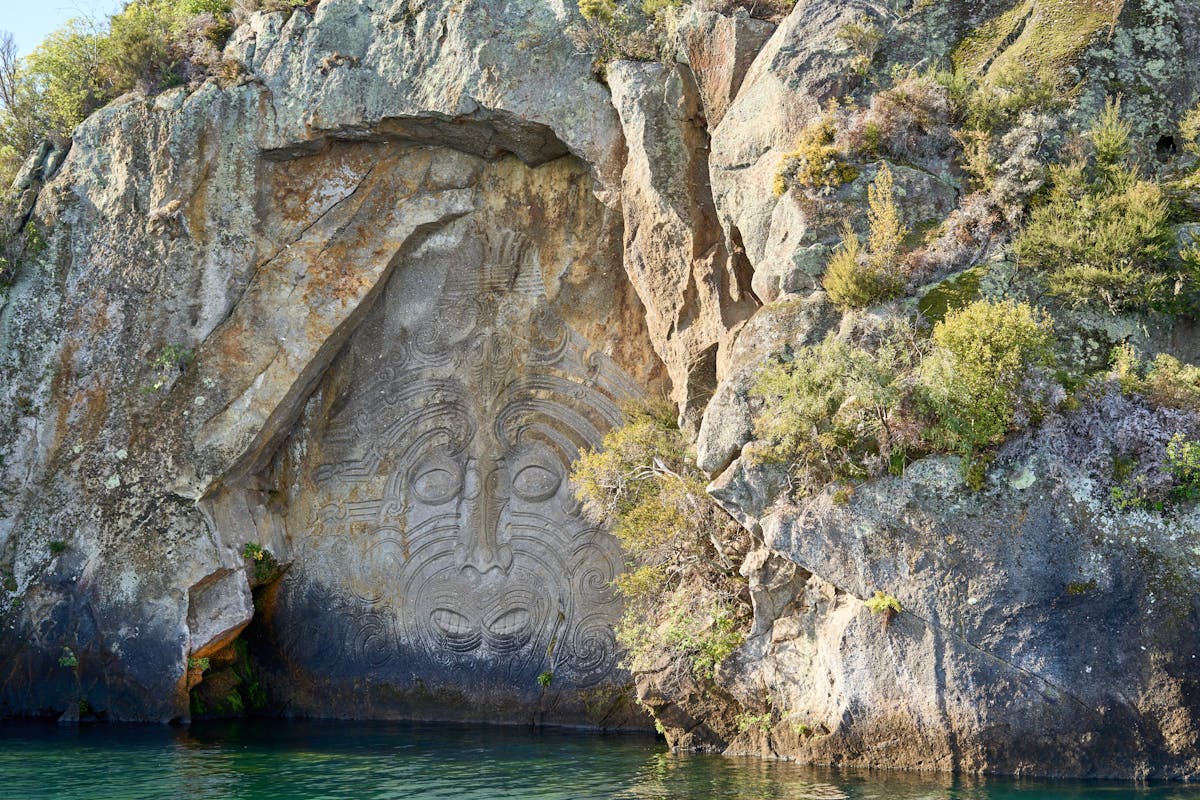
Lake Taupo isn’t only scenery — it carries deep cultural weight. The lake’s full Maori name is Taupo-nui-a-Tia, “the great cloak of Tia,” after the explorer Tia who, in Maori tradition, discovered it. The lake bed and its tributaries belong to Ngati Tuwharetoa, the iwi (tribe) whose whakapapa (lineage) runs through every feature of this landscape.
The most visible landmark is the Mine Bay Maori rock carvings — over 14 metres tall, cut into the cliff face by master carver Matahi Brightwell in the late 1970s. They depict Ngatoroirangi, the navigator who guided the Tuwharetoa and Te Arawa canoes to the region, and they’re only reachable from the water by boat, kayak, or paddleboard. For the full story, the Maori culture, history, and volcanic heritage guide goes deep on the legends and the people.
Learning a little local tikanga (custom) makes the whole visit richer. Respect the signs asking you to stay on tracks near sacred sites, pick up a few te reo Maori place names (Taupo alone tells a story), and think about joining a cultural tour or a hangi (traditional earth-oven feast) while you’re here.
What to pack for backpacking Lake Taupo
Packing for Taupo means packing for New Zealand’s famously changeable weather, plus gearing up for a mix of hiking, water, and town wandering. For the complete checklist, see the Lake Taupo packing list for backpackers.
Clothing essentials
Layering system: The weather here can flip from sun to rain inside an hour. Build around layers — a merino or synthetic thermal base, a fleece or down mid-layer, and a waterproof shell. Skip cotton; once it’s wet it pulls heat off you and takes forever to dry.
Rain gear: A proper waterproof jacket (Gore-Tex or equivalent — waterproof, not “water-resistant”) is non-negotiable. Waterproof over-trousers earn their space if you’re doing the Crossing or spending long stretches outdoors.
Footwear: Sturdy hiking boots with decent ankle support for the trails, plus lightweight sandals or jandals for hostels, hot springs, and town. Sun protection: The New Zealand sun is fierce — UV runs far higher here than at equivalent northern latitudes thanks to thinner ozone. Pack SPF 50+, a wide-brimmed hat, and good sunglasses.
Gear essentials
Daypack: A 20–30 litre pack for hikes; for the Crossing it needs to swallow 2+ litres of water, food, and your rain layers. Water bottle: Reusable, at least 1 litre — carry 2+ litres for the Crossing, as there’s no drinking water on the track. Swimwear and towel: You’ll use these more than you’d expect. A quick-dry travel towel saves pack space. Head torch: Essential for pre-dawn shuttle pickups and dorm navigation. First aid kit: Blister plasters especially — you’ll want them after the Crossing. Insect repellent: Sandflies get aggressive near the lake and rivers at dusk; DEET works best. Pack liner or dry bags: Keep your gear dry inside your pack, because New Zealand rain doesn’t care about your schedule.
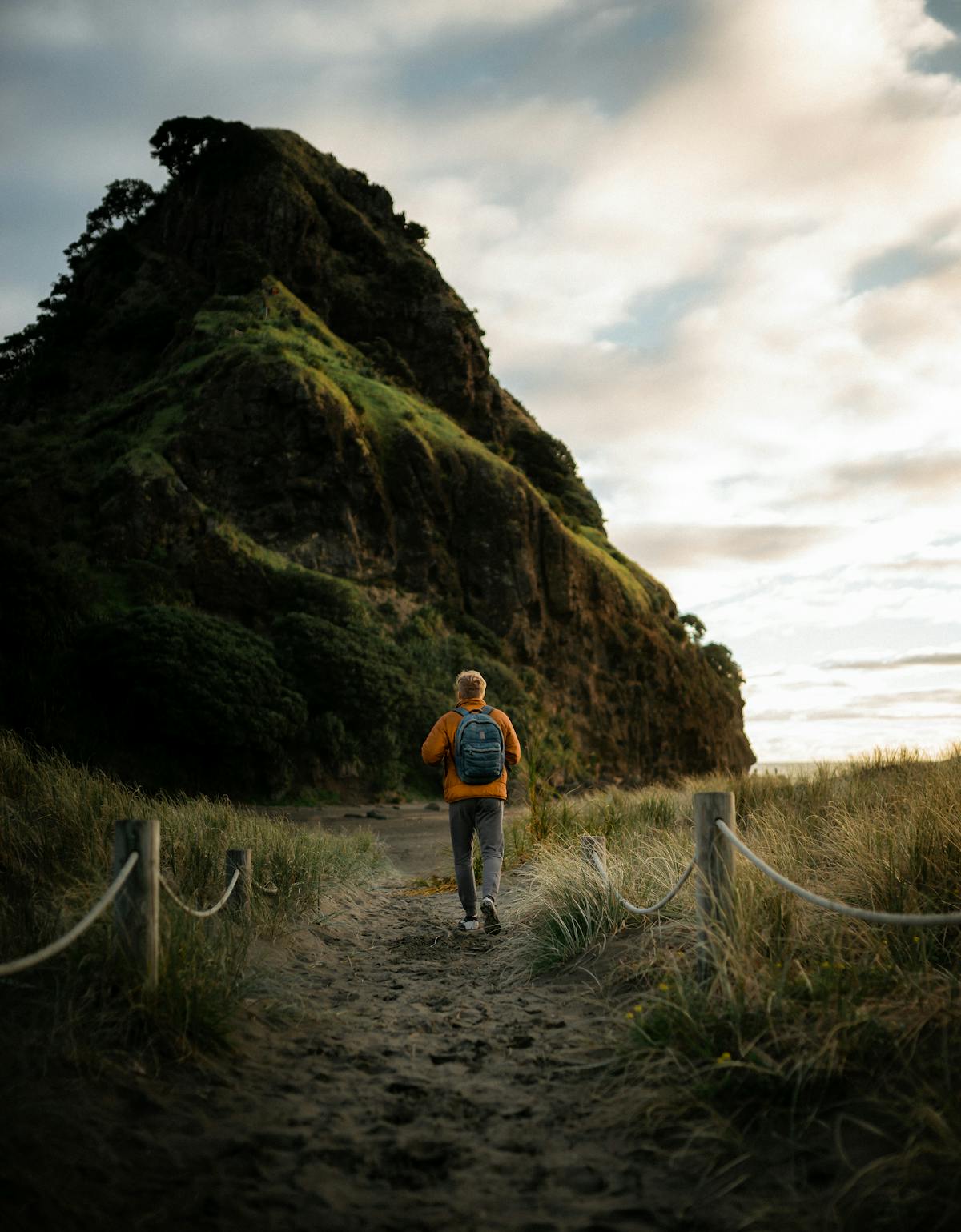
Sample 3-day backpacking itinerary
Here’s a taste of what three well-planned days look like. For fuller day-by-day plans, see the 3-day, 5-day, and 7-day Lake Taupo itineraries.
Day 1: Arrive and explore town
Check into your hostel, then walk the Great Lake Walkway along the lakefront to get your bearings and take in the volcanic plateau. In the afternoon, head to Spa Thermal Park and soak in the free springs where the Otumuheke Stream meets the Waikato. Grab groceries from Countdown or PAK’nSAVE and cook at the hostel. If it’s a Saturday, hit the Riverside Park market first.
Day 2: Tongariro Alpine Crossing
Catch the early shuttle (5:45am or 7:15am) to the Mangatepopo trailhead and hike the full 19.4 km Crossing. You’ll cross volcanic country, peer into active craters, pass the turquoise lakes, and — on a clear day — see all the way to both coastlines. The shuttle drops you back in Taupo late afternoon. Dinner out; you’ve earned it. Pack at least 2 litres of water, plenty of food, sun protection, and all your rain layers no matter what the forecast says.
Day 3: Huka Falls, hot springs, and adrenaline
Walk or cycle to Huka Falls in the morning (5 km from town, about an hour on foot). Carry on along the Waikato River trail to the Aratiatia Rapids and time it for a dam release. In the afternoon, pick your adventure: skydive over the lake, jet boat to the base of Huka Falls, or kayak to the rock carvings at Mine Bay. Or keep it free with a Mount Tauhara climb for sunset over the lake.
Solo backpacking in Taupo
Taupo is a great solo destination. The hostel scene is sociable without being overwhelming, and the compact town makes it easy to fall in with other travellers at the hot springs, on shuttle buses, and over kitchen dinners. Safety isn’t really a concern — low crime, laid-back, welcoming.
A few pointers: hostels like Haka House and Finlay Jack’s have common areas built for mixing, and group activities — rafting, kayak tours, the Crossing shuttle — throw solo travellers together naturally. Turn up alone wanting company for the Crossing and you’ll have hiking buddies within the hour. For everything else on going it alone, see the Lake Taupo solo backpacking guide.
Practical tips and local knowledge
Wi-Fi: Most hostels have free Wi-Fi, though speeds vary. The Taupo District Library on Story Place has free Wi-Fi and comfortable seating for planning and booking. SIM cards: Grab a prepaid SIM from Spark, One NZ, or 2degrees at the Warehouse or an electronics shop. Spark tends to have the best rural coverage. i-SITE Visitor Centre: At 30 Tongariro Street — genuinely useful staff who book activities, check Crossing weather, and often know the unadvertised deals.
Laundry: Most hostels have coin machines, plus there are laundrettes in town. Medical: Taupo has a medical centre and pharmacy on the main street; for emergencies, dial 111. The nearest hospital is in Rotorua (about an hour). Sandflies: Real, hungry, and fond of the lakefront at dusk — long sleeves and repellent in the evening. Tap water: Safe everywhere; fill up and save money. Tipping: Not expected or customary in New Zealand. For a fuller safety rundown, see the safety tips for backpackers in Taupo.
Day trips from Taupo
Taupo’s central location makes it an ideal base for the wider region. For the complete guide, see the day trips from Taupo pillar.
Tongariro National Park: Just under an hour south, a dual World Heritage Site with the Alpine Crossing, the Northern Circuit multi-day hike, and two ski fields in winter. Rotorua: About an hour north for geothermal parks, Maori cultural experiences, and mountain biking. Orakei Korako: A 25-minute drive north to one of the world’s most impressive geothermal areas. Huka Falls and Wairakei: Combine a morning at the falls with the Wairakei Terraces, all within 15 minutes of town. Turangi: The quieter town at the southern end of the lake, gateway to prime fly-fishing country.
Taupo for families
This guide is aimed at backpackers, but Taupo is outstanding for families too — safe swimming beaches, the DeBretts water park, farm visits, mini golf, and plenty of easy walks for younger legs. For the complete family resource, see the Lake Taupo with kids guide.
Frequently asked questions
Is Taupo worth visiting for backpackers?
Yes — it’s one of the best backpacker stops in New Zealand. It pairs free natural attractions like hot springs and waterfalls with world-class adventure activities at competitive prices. The compact town, cheap hostels, and central North Island location make it an easy, rewarding addition to any itinerary.
How many days should I spend in Taupo?
Two to three days covers the highlights — the Tongariro Alpine Crossing, Huka Falls, and the free hot springs. Add fishing, adventure activities, or day trips and four to five days serves you well. Plenty of backpackers end up extending.
Is Lake Taupo safe for swimming?
Yes. Several beaches have gentle entries and the water’s clean and clear. That said, the lake is large and conditions shift, so don’t swim far from shore and watch for boat traffic near the marina. The geothermal hot springs are separate from the lake and vary in temperature — test with your hand first.
Can I do the Tongariro Alpine Crossing from Taupo?
Absolutely — Taupo is the most popular base for it. Multiple shuttle operators run daily to the Mangatepopo trailhead and collect from the Ketetahi end, roughly 1.5 hours each way. Book ahead in summer.
What is the cheapest accommodation in Taupo?
Hostel dorm beds from around NZD $25 a night. Freedom camping is free with a certified self-contained vehicle. Nearby DOC campsites start at NZD $8–$15 for basic facilities, and backpacker holiday parks with tent sites from around NZD $18 per person.
Do I need a car in Taupo?
Not necessarily. The centre is walkable, there’s a local bus, and shuttles cover the main attractions and the Crossing. A car does add flexibility for day trips and remote spots like Orakei Korako and the western bays — the transport guide weighs up the options.
Guides in this series
This hub links to every in-depth backpacking guide for Lake Taupo. Work through them in order or dip into whichever you need:
- How to Plan a Backpacking Trip to Lake Taupo
- Lake Taupo Backpacker Budget Breakdown: Daily Costs
- Best Time to Visit Lake Taupo for Backpackers
- Lake Taupo Packing List for Backpackers
- 3-Day Lake Taupo Backpacking Itinerary
- 5-Day Lake Taupo Backpacking Itinerary
- 7-Day Lake Taupo and Surrounds Itinerary
- Lake Taupo Solo Backpacking Guide
- Lake Taupo Weather: Month-by-Month Guide
- Safety Tips for Backpackers in Taupo