If you have NZ$100 to spend, the ranking of Lake Taupo water activities is simple: hire a stand up paddleboard or kayak for a half day at roughly NZ$30 (2026 prices), then decide whether the rest goes on a scenic cruise or a guided paddle to the Mine Bay rock carvings. Everything else here is a step up in price and, mostly, a step down in value per dollar. This sits under the wider Things to Do in Lake Taupo pillar, and it exists because most water write-ups list operators without saying which are worth the money.
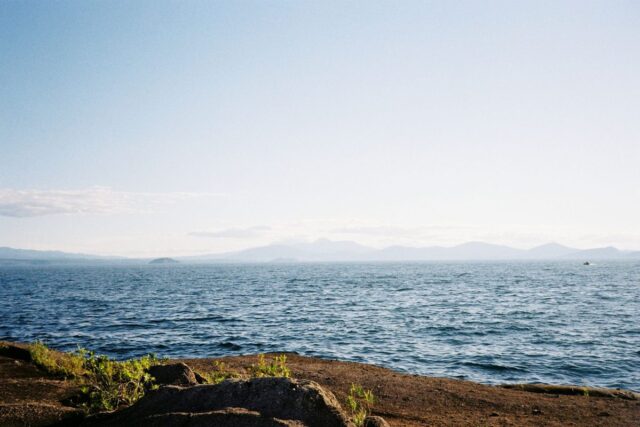
Lake Taupo is 616 square kilometres and 186 metres deep, the flooded caldera of the eruption that went off around 232 AD. That scale matters practically. The lake makes its own weather, and an afternoon breeze that would be nothing elsewhere turns it into a short steep chop that ends your paddle early. Almost every disappointing day here traces back to the wrong thing booked for the wrong time.
What follows is activity by activity with a price and a verdict, plus the parts other guides skip: seasons, what to book ahead, doing it without a car, a costed day at three budget levels, and what is overrated. Prices are August 2026 and they move over the peak.

The short answer: where a limited budget goes first
If you can only afford one thing on the water, make it the paddle hire or the scenic cruise, and let the weather and your confidence decide which. Calm morning, reasonable fitness, comfortable in cold water? Paddle yourself. Windy, or travelling with a non-swimmer, or you just want to sit down and look at things? Take the cruise. Those two cover most of what people actually want from Lake Taupo, and they are the two cheapest options here.
Above that sits the adrenaline tier: jet boating, rafting, parasailing. None are bad, but all are short and cost three to four times the paddle hire. On a backpacker budget in Taupo with one splurge in you, most people get more from a skydive or a bungy, because the land based adventure activities in Taupo are what this town is famous for.
Kayak and SUP hire: the cheapest way onto the lake
A stand up paddleboard runs roughly NZ$30 for a half day through town operators in 2026, with single and double kayaks in a similar bracket. Canoe & Kayak Taupo on Spa Road, Taupo Kayaking Adventures and LakeFun Taupo on the lakefront all hire gear. Motutere Bay TOP 10 hires kayaks and boards on the eastern shore.
Cost and what you get: around NZ$30 for a half day SUP in 2026, board, paddle and buoyancy aid included, with a wetsuit for a few dollars more outside summer. Full day hire is not double the half day rate at most operators, so ask if you intend to be out six hours.
Verdict: the best value activity in Taupo, on or off the water. Thirty dollars buys two or three hours of doing exactly what you want on scenery that costs other people NZ$300. It suits confident swimmers and anyone who has paddled even once, and it does not suit nervous non-swimmers or anyone launching after 11am on a breezy day.
Where to paddle from, and how far to go
From the town lakefront the standard beginner route runs along the shore toward Two Mile Bay, inside the swimming markers, never more than fifty metres off the beach, and you can bail onto sand at any point. The more ambitious paddle heads west toward Acacia Bay, sheltered and quieter, though the water near the Waikato control gates is best avoided by beginners. Do not attempt Mine Bay unguided on a first outing: it is a long way, the return leg is into whatever wind has arrived, and there is nowhere to land.
The Mine Bay carvings: there is no land access at all
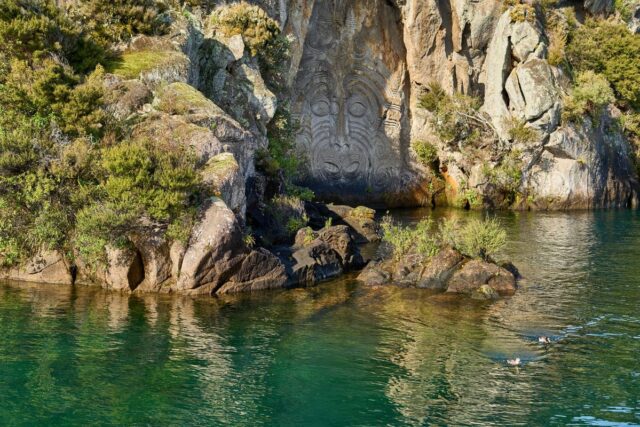
This is the most important correction in this guide. The Ngatoroirangi carvings at Mine Bay are 14 metres of rock face cut into the cliff in the late 1970s by Matahi Whakataka-Brightwell, and there is no road, no track and no walk to them, nor any public shore viewpoint. A surprising number of guides imply otherwise by listing the carvings without saying how you get there, and people arrive having budgeted nothing for the only three ways in.
Those three ways are a scenic cruise, a guided kayak, or your own boat. The site means far more when you know what you are looking at, so the background on the Maori rock carvings at Mine Bay is worth reading first.
Guided kayak, NZ$120 to 160 (2026): a three to four hour return trip from the town side or Acacia Bay, with a guide, a stable sea kayak and usually a hot drink in the middle. This is the version people remember. You approach at water level, close enough to see tool marks, and you have earned it. Guides coach complete beginners well, but if you are genuinely anxious in boats, take the cruise. Routes and operators are compared in the guide to kayaking to the rock carvings.
Kayak or cruise? The kayak is the better experience, the cruise is the better value. If the money feels close, pick on weather, because a guided paddle into a stiff wind is work rather than pleasure.

Scenic cruises to the carvings, costed
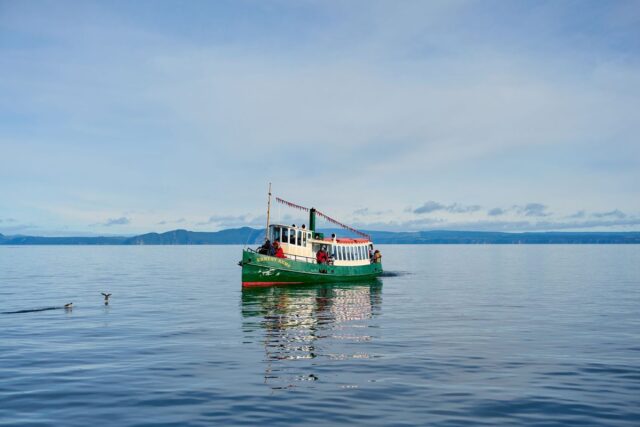
Cruises start from around NZ$59 per adult in 2026. Chris Jolly Outdoors runs the Cruise Cat from Berth 4 at the Taupo Boat Harbour on a 1.5 hour run to the carvings, departures including 10:30 and 13:30. The boat is fully enclosed and heated, with free wifi, a licensed bar, and a muffin and hot drink included. A family special covers two adults and two children aged 5 to 17 for NZ$99 against a normal combined NZ$128, a real saving rather than a marketing one.
Timing and logistics: from about NZ$59 adult in 2026, NZ$99 for the family special, departing Berth 4, a flat ten minute walk from most town centre beds. Arrive fifteen minutes early. The morning departure is the more reliable one for flat water and clean light; the afternoon run is likelier to be bouncy.
Verdict: the best value paid activity on the lake for anyone not paddling. Ninety minutes, a heated cabin, and the only realistic way for a family or an older traveller to reach the carvings without spending NZ$500. It also has no awkward age minimum.
Sailing on the classic yachts
Taupo has a small fleet of classic yachts running scheduled trips to the carvings, generally two to two and a half hours and priced above the catamaran. You are paying for the boat itself: timber, canvas, no engine noise, a turn on the helm. On a good breeze it is lovely. On a flat calm day you motor there and back and the point evaporates.
Verdict: worth it only if sailing itself appeals, not as a way of seeing the carvings, because the cheaper cruise does that job better. Check the forecast the night before. The specific boats and their sailing days are covered in the comparison of parasailing and sailing trips.
Parasailing, hydro bikes and the novelty tier
Parasailing puts you a few hundred feet above the lake on a towline behind a boat, usually ten to fifteen minutes of flight with the rest of the booking spent waiting your turn. Tandem flights and dry take-off from the boat deck are standard, and on a clear day you look straight down the lake toward the volcanoes.
Verdict: pleasant, mild and expensive per minute aloft. It is not a thrill ride, which is what people misjudge. If you want altitude and a view, a scenic flight buys far longer in the air for comparable money, and the roundup of scenic flights over Taupo makes that comparison directly. It is also a poor choice on a grey day, since the view is the entire product.
Hydro bikes are the other lakefront novelty, hired by LakeFun Taupo alongside their boards. Pedal driven and effectively un-tippy, they suit someone who wants to be on the water without balancing, and they are hard work into any wind. Budget around paddleboard money. Anyone comfortable on a SUP will find them slow.
Jet boating and white water rafting
Hukafalls Jet is the big one: roughly NZ$95 to 130 per adult in 2026 for 30 minutes, hourly from about 9am to 5pm, up the Waikato to the base of Huka Falls with 360 degree spins on the way. The falls push something like 220,000 litres per second through a channel about 15 metres wide before dropping 11 metres, and getting close to the bottom of that is legitimately impressive.
Cost and verdict: NZ$95 to 130 for 30 minutes in 2026, roughly NZ$3 to 4 a minute. Good ride, and the setting does much of the work. The catch is that you can stand at the top of the falls for free, any day, with no parking charge, and the free view is the one that actually shows the volume. Take the jet boat for speed and spins; skip it if what you want is to see the falls. Operators and discount timings are in the guide to the Huka Falls jet boat.
Rafting the Tongariro River, about 50 minutes south near Turangi, is the better adrenaline buy. You are on the water a couple of hours rather than half an hour, the grade three section has a long run of continuous rapids, and there is a gentler grade one float on the same river. Trips usually include gear, transport and a hot shower afterwards.
Verdict: better value per dollar than the jet boat, because you get far more time on the water and a proper trip out of town. It suits groups, and the grade one option works for families. Grades, seasons and what to wear are in the guide to white water rafting near Taupo.

Boat hire, self-drive and charters
Self-drive hire is the option backpackers dismiss too quickly. Small runabouts and pontoon boats hire by the hour or half day, and while the sticker price looks steep next to a kayak, split across four to six people it lands between the cruise and the guided kayak per head. You set your own route and reach the carvings on your own schedule.
The catch: you are responsible for the boat and for reading conditions, and this lake punishes people who misjudge that. Most operators will not hire out on a marginal forecast. Fuel is usually extra and a bond is standard. Good for a confident group on a settled morning, bad for four people who have never driven a boat.
Charters sit at the other end. A skippered boat handles navigation, gear and local knowledge, and here that overwhelmingly means fishing. Rates are quoted per boat per hour with a two or three hour minimum, so again the maths only works with a group. What operators include is set out in the guide to charters and guides on the lake.
Fishing and the licence rule that catches everyone
Taupo is its own fishery district. A standard Fish & Game New Zealand licence does not work here. This trips up more visitors than any other rule in the region, including New Zealanders who have fished elsewhere for years. You need a Taupo Fishing District licence, by the day or for the season, and you need it before you cast rather than after a ranger asks.
Buy it online or over the counter in town. Day licences are cheap and are the single cheapest way to spend a whole day on the water if you can borrow a rod. Seasonal closures and what the licence covers are laid out in the guide to the Taupo fishing licence, with the wider practicalities in the overview of fishing on Lake Taupo.
One more thing before you plan a meal around it: trout cannot legally be sold anywhere in New Zealand, so no restaurant in Taupo sells it. Several licensed restaurants will cook your own catch for a fee, which is a fine end to a fishing day, but you have to catch it first and you should ring ahead.
Shore fishing versus getting on a boat
Shore fishing costs a licence and nothing else, and the river mouths are where the shore angler has the best odds. Boat fishing costs a charter or a hire and puts you over deeper water where fish are more reliably found outside the winter run. The trade-off is worked through in the comparison of shore versus boat fishing.
Verdict: for a backpacker, a day licence and a borrowed rod at a river mouth at dawn is one of the cheapest good mornings in Taupo. A charter is fine split four ways, and a poor idea alone.
Swimming, thermal water and open-water events
Swimming is free and it is the activity most people underuse. Two Mile Bay is the default: sandy, sheltered, close to town, with toilets, a cafe and a summer pontoon. Acacia Bay ten minutes west is calmer, with jetty access and a summer swimming platform. Further out, Kinloch is around 25 minutes north-west with a sheltered bay and a marina. The full rundown is in the guide to swimming spots around Lake Taupo.
Temperature reality check: summer surface temperature is 20 to 22C and it does not feel warm on first entry. Winter surface is roughly 10 to 12C, cold enough to cause an involuntary gasp. January to March is the realistic window; outside it you want a wetsuit or a very short dip. Depth drops off fast in places and there are no lifeguards at most lake beaches, so treat every entry as unsupervised, because it is.
The thermal alternative is Otumuheke Stream in Spa Thermal Park: free, gates 07:00 to 20:00, pools up to around 40C, changing rooms and a coffee kiosk on site. It is a hot stream meeting a cold river rather than lake swimming, and one of the best free things to do in Taupo. Never submerge your head, because of the amoebic meningitis risk in warm freshwater. When locals say Hot Water Beach they mean this outflow, not the Coromandel beach of the same name.
For open water, the Across the Lake Swim runs annually in summer and is the event to target if you want a goal rather than a paddle about. IRONMAN New Zealand, on 7 March 2026 and 6 March 2027, opens with a lake swim too. Both fill accommodation for miles, so check the calendar first.
Where you must not swim: the Waikato below Huka Falls, anywhere near the falls, and anywhere near the Aratiatia gates. Aratiatia releases at 10:00, 12:00 and 14:00 year-round plus 16:00 from October to March, and the riverbed goes from dry rock to full flow in minutes. Watching it is free and excellent. Being in the channel is not survivable.

The wind problem and the morning window
Here is the fact that shapes every water day in Taupo: the lake is usually glass at dawn and choppy by mid afternoon. It is a big body of water in a basin ringed by high country, and the daily heating cycle reliably builds a breeze from late morning. That is the pattern, and every local operator schedules around it.
Practically: book the 10:30 cruise over the 13:30, take the morning kayak slot, be on your hire board by nine, and treat any afternoon paddle as a bonus. If your only free time is the afternoon, pick something that copes with chop: the enclosed cruise, the jet boat, or rafting the Tongariro.
The other half is the forecast. Taupo gets roughly 1,100 to 1,350 mm of rain a year over about 125 rain days, June wettest at around 14 and February driest at around nine. Widely spread, so a week here usually contains a wet day. Plan the water activity for the good morning you are given, not the day you circled. Seasonal patterns are in the Taupo weather guide.
Safety and cold water
Cold water is the risk people underestimate, not the wind. Twenty to 22C is fine for a summer swim but will still sap you after a capsize, and 10 to 12C in winter takes your breath within seconds. Wear the buoyancy aid rather than sitting on it, tell someone your plan, keep a phone in a dry bag, and stay close enough to shore to get back with the wind against you.
Check the forecast the night before and again at breakfast, and be willing to cancel. Operators here cancel readily, which tells you how seriously conditions are taken locally. Broader regional rules, including river hazards, are in the Taupo safety tips.
Season by season on the water
December to February: peak. Everything runs, the water is at its warmest at 20 to 22C, and February is statistically the driest month at around nine rain days. Prices are highest and hire gear runs out by mid morning, so book cruises and guided trips a day or two ahead.
March to May: the underrated window. Water holds summer warmth into March, crowds thin, prices soften and mornings are often exceptionally still. Swimming turns marginal by late April. Best time for the guided kayak, because you get calm water and you are not sharing the carvings with three other groups.
June to August: winter, and June is the wettest month at around 14 rain days. Lake swimming is out for most people at 10 to 12C. The cruise still runs and the heated cabin becomes a selling point rather than a footnote. Winter is trout season on the river mouths, so the fishing gets better, not worse.
September to November: shoulder, improving weekly. Water still cold, air warming, wind at its least predictable. Good for cruises and rafting, marginal for swimming until late November, and prices are at their friendliest.
Booking ahead, combo savings and doing it without a car
Book ahead: guided kayak trips, fishing charters, rafting, and cruises during December to February or any event weekend. Fixed capacity, small boats, and the good morning slots go first. A day or two of notice is enough outside peak.
Walk up: kayak and SUP hire, hydro bikes, swimming, shore fishing once you hold the licence, and the jet boat, which runs hourly. If your plan depends on weather anyway, walking up is smarter, because you buy the activity that suits the morning you actually got.
Combos are where the real savings sit. Operators bundle jet boat with skydive, bungy with the swing, rafting with other activities, and multi-activity passes appear seasonally, typically fifteen to thirty percent off separate bookings. The catch is that a combo only saves money if you wanted both halves, and the classic mistake is buying a three activity pass then running out of nerve for the third. Current bundles are assessed in the guide to Taupo combo deals.
Water activities without a car
You do not need a vehicle for most of this. Berth 4 and the boat harbour are a flat walk from the town centre, the hire operators are on the waterfront, and Two Mile Bay is a short bus ride or about 40 minutes on foot along the sealed lakefront path. Spa Thermal Park is walkable, and most adrenaline operators run a pickup from town.
What genuinely needs wheels is Acacia Bay, Kinloch, the Aratiatia release and the eastern shore bays. Shuttles and the realistic hitching situation are covered in the guide to getting around Taupo without a car. Staying central matters more than it looks on a map, because everything on the water starts at the harbour or the lakefront.
A costed water day at three budget levels
All figures are August 2026, one person, excluding accommodation and transport.
The NZ$30 day
How it runs: up at seven, hire a paddleboard for a half day at roughly NZ$30 and be on the water by half past eight while it is still glass. Paddle toward Two Mile Bay and back over two or three hours. Return the board at midday, swim off the beach, eat food you brought, then walk out to Spa Thermal Park and soak in Otumuheke Stream for nothing. Water spend: about NZ$30. Time on or in the water: six hours or more.
Verdict: the best day on this page and also the cheapest. It only fails if the morning is genuinely rough, in which case swap the paddle for the cruise and accept the higher spend.
The NZ$90 day
How it runs: the 10:30 Cruise Cat from Berth 4 to the Mine Bay carvings at around NZ$59, ninety minutes, muffin and hot drink included. Ashore by midday. Hire a paddleboard for the afternoon at roughly NZ$30 if the wind has held off, or swap it for a swim and the free thermal stream if it has not. Total around NZ$89, or NZ$59 if the afternoon goes free. That is the carvings plus the lake under your own power for less than one jet boat ride.
Verdict: the best balance on the list and the day most travellers should aim for. It covers the one unmissable thing on the water and the one best value thing, and it leaves the afternoon flexible.
The NZ$200 day
How it runs: guided kayak to the carvings in the morning at NZ$120 to 160, three to four hours, arriving at water level with a guide who can explain what you are looking at. Lunch in town. Afternoon jet boat at NZ$95 to 130 for 30 minutes, or a swim and the thermal stream for nothing if the paddle has finished you off. Both: NZ$215 to 290. Kayak plus a free afternoon: NZ$120 to 160.
Verdict: the kayak morning is worth every dollar and the jet boat is the first thing I would cut. The equivalent maths for a whole trip is in the Taupo daily budget breakdown.
What’s overrated on the water
Parasailing. Ten to fifteen minutes aloft for money that buys a scenic flight several times longer with a better view. It is not a thrill ride, and people book it expecting one.
The jet boat as a way of seeing Huka Falls. The ride is fun, but the falls are free from the track above and that view is the better one for grasping 220,000 litres a second through a 15 metre gap.
Solo fishing charters. Charters are priced per boat, so one person pays for the whole boat. Get a group together or take a day licence and fish from shore.
Full day hire when you will paddle for two hours. Most people are done after two or three hours, particularly once the breeze arrives. The half day suits nearly everyone.
Afternoon anything on the open lake. Badly timed rather than bad. The same paddle that is superb at 8am is a slog at 3pm.
One underrated thing: the sailing trips, if there is wind and you like boats. On the right day it is the most memorable way to reach the carvings, and it gets overlooked purely on price.

Frequently asked questions
Can you walk or drive to the Lake Taupo rock carvings?
No. There is no land access to the Mine Bay carvings, no road, no track and no shore viewpoint, despite what many travel listings imply. The only three ways to see them are a scenic cruise from around NZ$59 in 2026, a guided kayak at NZ$120 to 160, or your own boat.
What is the cheapest water activity in Lake Taupo?
Swimming, which is free, and after that paddleboard or kayak hire at roughly NZ$30 for a half day in 2026 through the town lakefront operators. The thermal pools at Otumuheke Stream, open 07:00 to 20:00, cost nothing as well. Paddle hire is the best value paid activity in Taupo by a clear margin.
Do I need a special fishing licence for Lake Taupo?
Yes. Taupo is its own fishery district and a standard Fish and Game New Zealand licence does not cover you. You need a Taupo Fishing District licence, held before you start fishing. Trout also cannot legally be sold anywhere in New Zealand, so no restaurant sells it, though some licensed restaurants will cook your own catch for a fee.
What time of day is best for kayaking on Lake Taupo?
Early morning, and it is not close. The lake is typically flat at dawn and builds a chop from late morning, so anything on the open lake is best started before about nine. Operators schedule guided trips the same way. If your only free time is the afternoon, choose an enclosed cruise, the jet boat, or a rafting trip instead.
How cold is Lake Taupo for swimming?
Summer surface temperature is 20 to 22C, swimmable but not warm on first entry. Winter drops to roughly 10 to 12C, not casual swimming water without a wetsuit. January to March is the realistic window. There are no lifeguards at most lake beaches and the depth drops off quickly, so treat every swim as unsupervised.
Is the Huka Falls jet boat worth the money?
It is fun but short, at roughly NZ$95 to 130 in 2026 for a 30 minute ride running hourly from about 9am to 5pm. The caveat is that you can see Huka Falls for free from the track above, and that view shows the volume of water better. Book it for speed and spins, skip it if what you want is to see the falls.
Final Thoughts
Taupo is one of the few adventure towns where the cheapest option is also the best one. A NZ$30 paddleboard on a still morning gives you more of the lake, for longer, than anything else on the price list, and because the water and the thermal stream are both free, a good water day costs less here than a single activity in Queenstown.
If you take one thing from this page, make it the timing. Book mornings. Nearly everything that goes wrong on Lake Taupo goes wrong in the afternoon. If you take a second, make it the carvings: there is no land access, so plan and pay for the cruise or the kayak, or accept you are not going to see them.
Everything else is optional. The jet boat, the parasail, the sailing trip and the charter are decent products, but none of them are why people remember this lake. Spend on the carvings and the paddle, keep the free swimming and the thermal stream in the plan, and let the rest go.
Back to the main guide: for the full picture of how the water fits alongside everything else in the region, head back to Things to Do in Lake Taupo.